
How Big is Your Footprint?
Salto Systems has achieved its goal of carbon neutrality through participation in two innovative projects, which shows that reducing a company's carbon footprint is possible.


In 2015, the United Nations Climate Change Conference reached a global pact (the Paris Agreement) to mitigate the effects of climate change and achieve neutrality by 2050. Neutral greenhouse gas emissions are achieved when the same amount of greenhouse gases (CO2 equivalent) emitted are removed from the atmosphere in different ways. This does not mean human activities cannot emit any CO2, but it does imply that we cannot generate more than we can remove.
Salto Systems has achieved carbon neutrality thanks to its participation in two innovative projects with a triple-transformative effect on the economy, society and nature to achieve the company’s goal: for its operations to have zero impact on the climate. This initiative was preceded by ambitious emission reduction targets that, subsequently, aim to offset emissions that cannot be avoided.
100% of the electricity used in Salto’s factory is now sustainable and comes from renewable sources. 25% of the electrical energy comes from the sun. Salto has installed 640 solar panels in its factory, the first large-scale solar power installation in its global network. Salto has also minimized single-use plastics in its packaging, offices, work café and marketing materials and replaced them with more sustainable alternatives, such as biodegradable products made from FSC-certified paper, cellulose and wood. The company also sets mandatory environmental standards to embed sustainability across its worldwide network of offices.
Tree Saving
In order to accelerate decarburization and contribute to achieving the emission-reduction goals set by the Paris Agreement and the UN Sustainable Development Goals, Salto is committed to promoting environmental recovery projects through revegetation, in order to offset CO2 emissions by sequestering them in tree species. In total, the 1,721 tons of CO2 generated in 2020 (359 at its headquarters in Oiartzun, Gipuzkoa in Spain and 1,362 across its worldwide network of offices and group companies) were offset in 2021 through two ground-breaking projects: reforestation and protection of hydrographic basins in the Andes, and Apadrina un Olivo (Sponsor an Olive Tree) in Teruel, Spain, which fights to recover and maintain olive groves in Spain. Both projects, in addition to having a positive environmental impact, contribute to the fight against climate change and positively influence the local society and economy.
MDL Forestal Chinchiná
This forestry project in the Chinchiná river basin was the first to be registered with the United Nations Clean Development Mechanisms (CDM) program in Colombia, generating benefits through the mitigation of climate change by guaranteeing the capture of carbon dioxide. It also improves water quality and protects the region’s flora and fauna by creating biological corridors.
Apadrina un Olivo
At ApadrinaUnOlivo.org, their mission is to recover abandoned olive groves in Oliete in the Teruel region of Spain. This environmental, social and sustainable rural development project helps families and keeps people in depopulated rural towns by developing rural areas. The initiative also protects the precious flora and fauna that inhabit and depend on the olive groves to survive, helping to protect biodiversity and reduce the carbon footprint. Thanks to these two projects and other strategies devised to decarbonize Salto’s activities, together with a commitment to the environment and looking after the natural world, Salto has been able to achieve carbon neutrality across all its factories and offices, in more than 40 countries.
Business Partner
SALTO SystemsPolígono Lanbarren, C/ Arkotz, 9
20180 Oiartzun
Spain






most read

Secsolutionforum 2026 to explore integrated security, resilience and regulatory developments in Italy
Secsolutionforum 2026, the event dedicated to physical and digital security, will take place on 7 and 8 October at BolognaFiere, as part of Urban Tech 2026 – The Urban Technology Show.
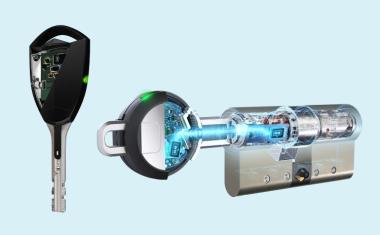
Digital Access with the Familiarity of a Key: A Versatile Combination
As organizations upscale, downsize, or onboard new locations, facility managers must more flexibly manage access control ever and frequently adapt to new situations.
Fiber Optic Sensing for Critical Infrastructure: Real-Time Threat Detection Across Vast Networks
Fiber optic sensing enables real-time monitoring and early threat detection across critical infrastructure

Certification you can specify with confidence, wherever you're building
Specifying fire detection across Europe is rarely as simple as choosing a product that works.
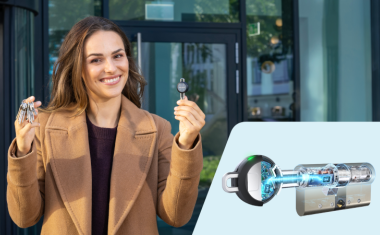
Programmable keys and digital locking cylinders can simplify access and compliance
The key to meeting building managers’ growing security and compliance challenges – without increasing workload or costs – is the implementation of smarter access