Axis Perspectives Report 2026: How Intelligent Video Technology Strengthens Security and Transforms Business Processes
Axis Communications has published its first annual "Axis Perspectives Report". It is based on the company's own global research, expert opinions and real-world application examples and shows the development of intelligent video technologies and their growing importance in various industries. It also illustrates the contribution that intelligent video technologies make to improving safety, security, operational efficiency and business intelligence.
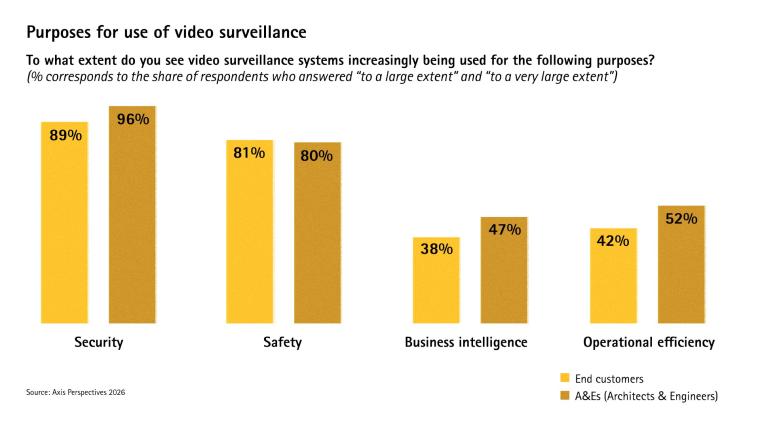
The findings from the report point to a clear change: although security is still the top priority for companies when using intelligent video technologies, they are also increasingly using these technologies as business drivers to support their business processes. Video technologies act as intelligent analysis tools to optimize operational processes and drive strategic corporate development. On this basis, companies gain valuable information that can be used to increase productivity, reduce costs and implement automation on a large scale.
Strategic Roadmap
The "Axis Perspectives Report" provides a strategic roadmap on how companies can actively integrate cameras into decision-making processes and thus achieve measurable results in critical areas of application. What this added value looks like in practice becomes clear across various industries: in retail, for example, intelligent video technologies reduce inventory discrepancies and support data-based decisions on space planning and staff deployment. In transport and logistics environments, they increase throughput, improve transparency along the supply chain and minimize sources of error. In industry, cameras optimize machine and production processes, detect deviations at an early stage and support quality controls as well as predictive maintenance. One specific example is provided by the BMW Group, where cameras are used to support AI-controlled quality inspection (AIQX), enabling precise, automated inspections to improve product quality and operational efficiency.
Creating Competitive Advantages
The report provides companies with the information they need to develop integrated, data-driven solutions that create tangible competitive advantages. To help organizations do this, the report also introduces a five-stage maturity model for intelligent video that enables organizations to move from passive and reactive systems to proactive, predictive and ultimately autonomous processes. This model allows executives to assess their organization's current maturity level and provides a practical path towards a more effective intelligent video technology strategy.
"We are currently observing how the perception of video technology in companies is changing across the board. It is increasingly seen as a strategic source of data, insight and automation across the organization," says Tobias Metsch, Regional Director Middle Europe at Axis Communications. "Axis Communications has many years of experience with innovation in network video, so we believe it is important to take a strategic view of the development of these technologies and their use cases."
Das Wichtigste auf einen Blick
- Mehr Einfluss auf das Gesamtgeschäft: Die Nutzung von intelligenten Videotechnologien für Business-Intelligence-Anwendungen, um beispielsweise Erkenntnisse über Kundenverhalten, Raumnutzung oder Performance zu gewinnen, hat sich in nur einem Jahr fast verdoppelt (von 20 auf 38 Prozent). 42 Prozent der befragten Unternehmen nutzen die Technologien mittlerweile aktiv zur Steigerung der betrieblichen Effizienz, um beispielsweise Arbeitsabläufe oder logistische Prozesse zu optimieren oder Ressourcen in Echtzeit zu verwalten (im Vergleich zu 38 Prozent 2024).
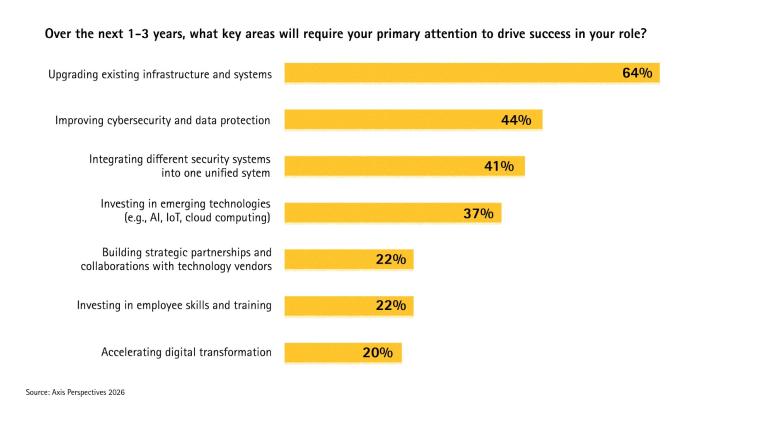
- Kundenprioritäten im Wandel: Die Modernisierung ihrer Infrastrukturen ist für 64 Prozent der befragten Endnutzer der wichtigste Treiber für die Nutzung von intelligenten Videotechnologien. Für 44 Prozent ist Cybersicherheit entscheidend.
- Schnellere Cloud-Implementierungen: Mit der zunehmenden Bedeutung neuer Anwendungsfälle wird die Cloud-Implementierung im Bereich physische Sicherheit voraussichtlich innerhalb der nächsten zwei Jahre von 27 auf 44 Prozent steigen – ein Anstieg von 17 Prozentpunkten.
- Zunehmende Nachfrage nach Plattform-Integration: 41 Prozent der Kunden verlangen mittlerweile einheitliche Plattformen. Dies unterstreicht noch einmal, wie wichtig Systemintegration als Erfolgsfaktor ist.