
Programmable keys and digital locking cylinders can simplify access and compliance
The key to meeting building managers’ growing security and compliance challenges – without increasing workload or costs – is the implementation of smarter access
As organizations upscale, downsize, or onboard new locations faster than ever, facilities managers must manage access ever more flexibly and adapt on the fly. Increased service contracting has handed many essential building functions over to third-party providers rather than employees: they, too, need efficient access which does not compromise site security.
In addition, physical, cyber and ‘hybrid’ physical-cyber security threats loom large, as do regulations designed to protect critical sectors from them, including the EU’s NIS2 guidance and Cyber Resilience Act (CRA). Compliance and the implementation of joined-up security and access management are ongoing challenges, then, particularly in sectors on which NIS2 obligations fall most heavily: infrastructure, finance/banking, healthcare, energy, transport, and ICT sites such as data centers.
Mechanical locking was not designed for such a complex, dynamic environment. Yet this demanding landscape is becoming the ‘new normal’. At the same time, and despite these challenges, any new access or security solution must battle for budget and justify their total cost of ownership (TCO), producing real returns on investment (ROI) in the process.
Combining the advantages of keys and digital access
One prized benefit of the mechanical key is its familiarity. A mechanical locking system with patent protection may still be an appropriate solution. However, digitalization offers major opportunities for business efficiency and compliance.
Unlike mechanical security, a digital solution offers the ability to allocate time-based rather than blanket access authorizations, and to amend them quickly and flexibly. A digital credential, such as a smart key, can be programmed or de-authorized in seconds, negating the threat of a lost key in circulation, plus the significant cost of changing cylinders and re-keying. When building technologies can connect solutions for access, fire protection, and escape routes, for example, both user safety and facilities management benefit.
With a digital solution, audit capability is automated for each lock and user, benefitting compliance efforts; manual access tracking with mechanical keys is either time-consuming or, in many cases, impossible. Tracking and tracing access is one requirement of NIS2 regulations.
“Of course, moving from mechanical to digital access management is not as simple as flicking a switch,” says Jochen Wizemann, Head of Business Development for Key-based Digital Cylinders at ASSA ABLOY Opening Solutions EMEIA. “Many organizations have large systems which they cannot change all at once, so digital systems must be scalable gradually over time as budgets allow. The right programmable smart key system can offer this.”
Choosing the right key-based digital solution
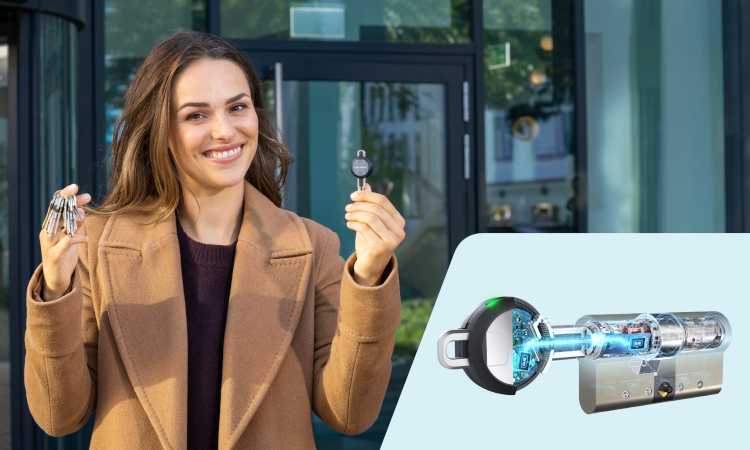
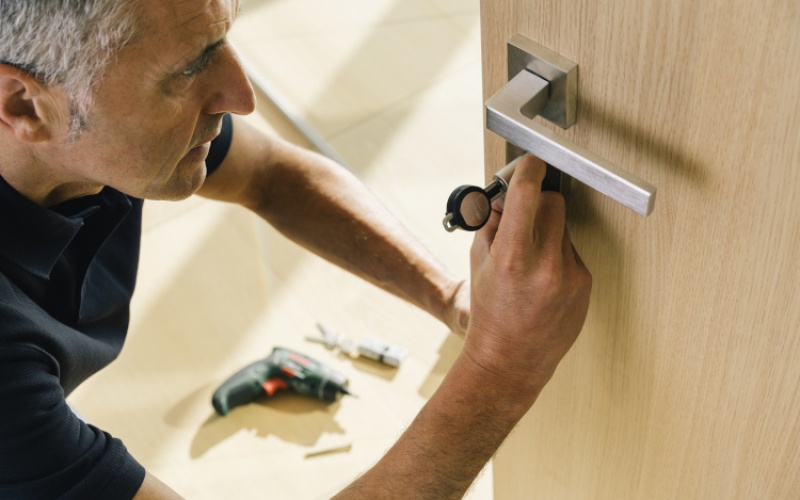
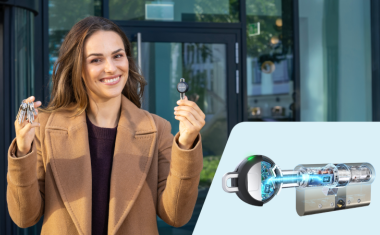
Smart key systems are the fastest, least disruptive way to switch mechanical security for intelligent digital access. They immediately upgrade the flexibility of access management in organizations of any size or type. Electronic or electromechanical locking cylinders simply slot into place instead of the legacy mechanical devices, without door damage or wiring. Intuitive software and programmable digital keys give facilities management teams granular control over the movements of staff and contractors.
One option is Assa Abloy’s Cliq solution, which simplifies the granting, personalization, and management of access rights. Because the Cliq system logs every access event, audit trails are generated with a few clicks in the software control panel – streamlining compliance obligations with the latest generation of regulations. The Cliq ecosystem includes more than 60 different cylinder and padlock types, ensuring almost any need can be met with a Cliq solution.
“Adaptability, scalability, security, convenience and trust are just some of the reasons Cliq has been adopted in some of the most demanding environments for access management,” adds Jochen Wizemann. “Cliq is trusted to manage access and protect secure spaces by the London Ambulance Service, at Düsseldorf’s 55,000-capacity stadium, at sensitive and dispersed water and electricity utilities sites, in Amsterdam’s World Trade Center, and at small offices, hospitals and schools all over Europe.”
“It provides reliable, flexible security and can deliver a concrete ROI, as modelling in our new whitepaper illustrates, alongside advice and checklists for decision-makers looking to upgrade from mechanical to digital access management.”







most read

Certification you can specify with confidence, wherever you're building
Specifying fire detection across Europe is rarely as simple as choosing a product that works.

Fiber Optic Sensing for Critical Infrastructure: Real-Time Threat Detection Across Vast Networks
Fiber optic sensing enables real-time monitoring and early threat detection across critical infrastructure

TEST | Perimeter Security: Optex's EchoPoint Impresses in Real-World Testing
GIT TEST SERIES – PART 3 | EchoPoint excels in field testing with precise fibre-optic detection and intelligent event classification

AI Reality Check: Genetec CEO Pierre Racz
AI in security: Genetec CEO Pierre Racz cuts through the hype and outlines what really works in practice.

Secsolutionforum 2026 to explore integrated security, resilience and regulatory developments in Italy
Secsolutionforum 2026, the event dedicated to physical and digital security, will take place on 7 and 8 October at BolognaFiere, as part of Urban Tech 2026 – The Urban Technology Show.