
EU CER Directive 2026: Strengthening Critical Infrastructure Resilience in Energy, Water, Transport and Health Sectors
The Critical Entities Resilience (CER) Directive will come into force across all European Union member states in July 2026. Member countries are also passing their own regulations, and a more holistic approach to the physical security ecosystem is being sought. An article by Andreas Beerbaum, VP of Sales, Physical Security – International, Hexagon’s Safety, Infrastructure & Geospatial Division.

Strengthening Europe’s Critical Infrastructure
Reminders of the importance of safeguarding national critical infrastructure can be found in global headlines each day, whether it’s a fire at an electrical substation, an attack on a nuclear power plant or water utility.
The impact of such incidents is rarely localized and the extended effects can, in some instances, be felt nationally and beyond. In an attempt to shore up defenses, a wave of new domestic and international regulations and directives has recently been introduced with the common objective of strengthening the resilience of critical infrastructure.
One of the most significant pieces of new regulations introduced in recent years is the Critical Entities Resilience (CER) Directive, which will come into force across all European Union member states in July 2026. The new rules will govern organizations operating in the energy, water, transport, banking and health sectors. The regulation aims to ensure the necessary resilience-enhancing measures are in place to improve the prevention, response and mitigation of incidents (such as natural hazards, terrorist attacks, insider threats and sabotage) that could disrupt essential services. The directive runs alongside the Network and Information Systems Directive II (NIS2), which came into force in October 2024 to shore up the cyber defenses of 18 critical sectors across the region.
Continue with login
No account yet?
Protected area: Register now for free and get full access to all exclusive articles from GIT SECURITY International. With our newsletter we regularly send you top news from the safety and security industries as well as the latest e-issue.
Register




most read

Secsolutionforum 2026 to explore integrated security, resilience and regulatory developments in Italy
Secsolutionforum 2026, the event dedicated to physical and digital security, will take place on 7 and 8 October at BolognaFiere, as part of Urban Tech 2026 – The Urban Technology Show.

Programmable keys and digital locking cylinders can simplify access and compliance
The key to meeting building managers’ growing security and compliance challenges – without increasing workload or costs – is the implementation of smarter access
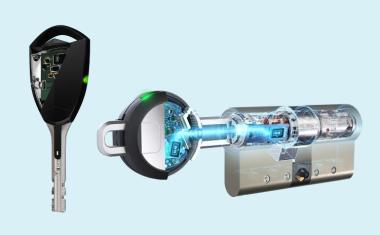
Digital Access with the Familiarity of a Key: A Versatile Combination
As organizations upscale, downsize, or onboard new locations, facility managers must more flexibly manage access control ever and frequently adapt to new situations.

Certification you can specify with confidence, wherever you're building
Specifying fire detection across Europe is rarely as simple as choosing a product that works.
TEST | Perimeter Security: Optex's EchoPoint Impresses in Real-World Testing
GIT TEST SERIES – PART 3 | EchoPoint excels in field testing with precise fibre-optic detection and intelligent event classification