
CSO Interview: Dr. Alexandra Forster on Global Threats, NIS2, and Crisis Management at Bayer
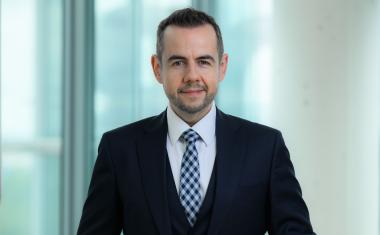
As a central functional unit, Corporate Global Security at Bayer develops global security standards for the three divisions: Crop Science, Pharma, and Consumer Health. The focus is on integrating governance with operational feasibility, as well as on close coordination with cybersecurity, compliance, and risk management. In an interview with GIT SECURITY International (German edition GIT SICHERHEIT), Dr. Alexandra Forster, Head of Corporate Security for the entire Group, describes the current threat landscape as multifaceted, characterized by geopolitical tensions, industrial espionage, and cyberattacks, all of which require the protection of employees, sites, and sensitive data.
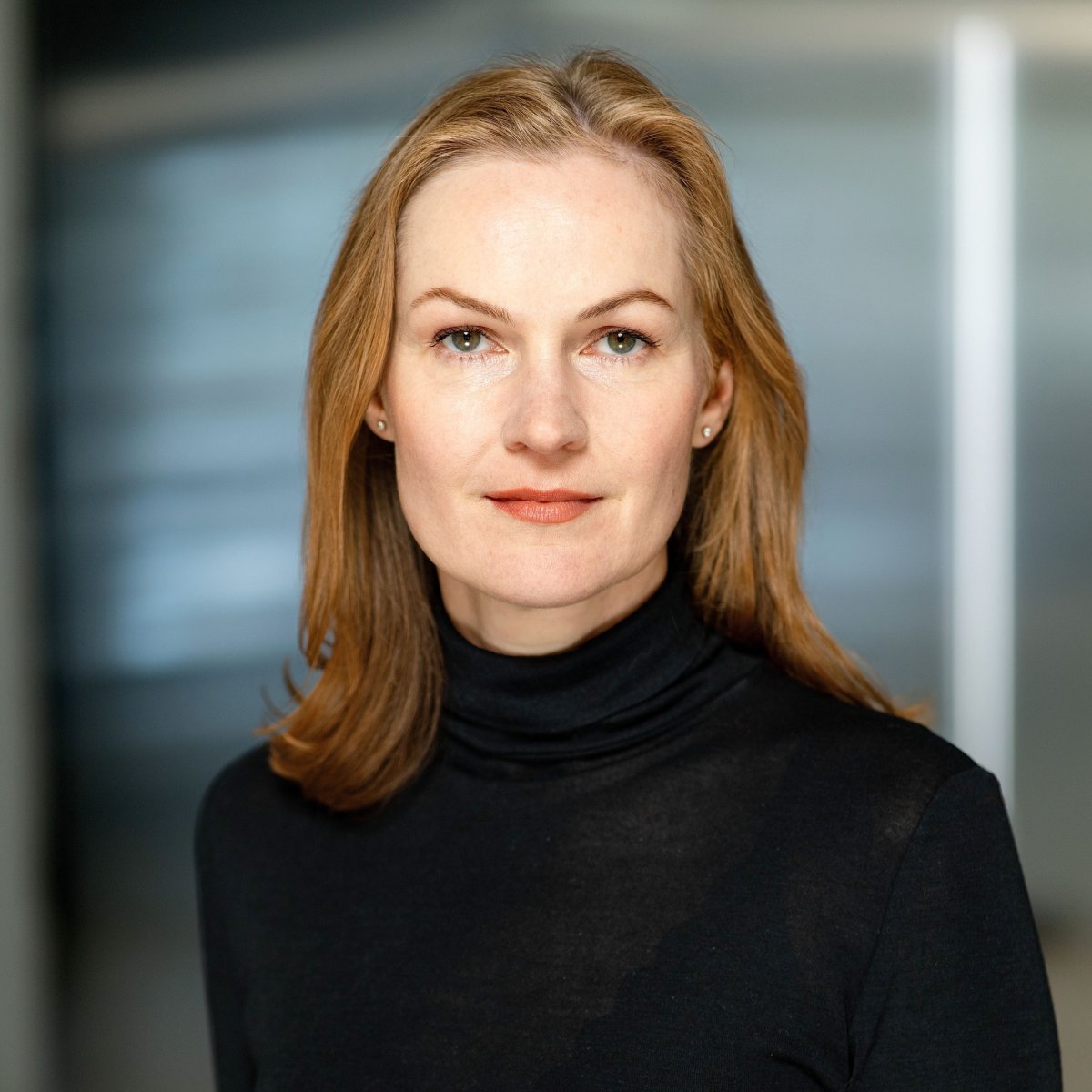
GIT SECURITY International: Dr. Forster, you are Head of Corporate Global Security at Bayer. To start, could you please introduce your unit?
Alexandra Forster: Corporate Global Security is the central function responsible for corporate security at Bayer. Our mission is to establish a common understanding of security worldwide: with clear standards, robust processes, and a professional assessment of the Group’s relevant risks. We support our three divisions—Crop Science, Pharma, and Consumer Health—in areas such as site and travel security, event security, personal protection, crisis management, threat intelligence, and investigations.
A key aspect of this is the integration of governance and operational feasibility. A standard is only effective if it actually works in practice at a production, research, or administrative site. To achieve this, we collaborate with regional security managers and local teams in the countries where Bayer operates. At many sites, we work with external security service providers. This is precisely why it is crucial that roles, expectations, and quality standards are clearly defined.
How do you define your own role?
Alexandra Forster: I see my role as providing guidance, setting priorities, and ensuring our team remains capable of taking action. Today, security is no longer a static protection concept but rather a continuous process of adaptation. Amid the company’s current transformation, it’s particularly important to me to support my team so that we can focus on what really matters: protecting Bayer’s people, sites, information, and ability to act.
How does Corporate Global Security at Bayer collaborate with other divisions within the company?
Alexandra Forster: Corporate Security no longer operates in silos. Many security issues arise precisely at the interfaces—for example, between physical security, cybersecurity, compliance, legal, HR, safety, and risk management. We therefore work closely with these functions on both a strategic and operational level. Strategically, this involves joint risk assessments, governance, and setting priorities. Operationally, we work in cross-functional teams on issues such as product counterfeiting, threat assessments, travel safety, the protection of sensitive information, and AI-enabled fraud attempts.
For me, it’s crucial that collaboration doesn’t just begin when a crisis strikes. We need resilient relationships, clear escalation pathways, and a shared understanding of who contributes what in which situation. Only then can we respond quickly and effectively.
Bayer is a life sciences company with production and research sites in approximately 80 countries around the world. Industrial espionage, politically motivated sabotage, cyberattacks, etc., are issues that pharmaceutical companies in particular must address. Could you give us some insight into which threat scenarios are most relevant for Bayer?
Alexandra Forster: For a global life sciences company like Bayer, the threat landscape is very complex. From a corporate security perspective, we focus on several key risk areas. First, there is the protection of our employees, particularly when traveling, on assignments, at events, or in countries with heightened political instability. Geopolitical tensions, social unrest, natural disasters, or regional conflicts can very quickly impact our ability to operate.
Second, protecting our sites and supply chains plays a central role.
Production and research sites must not only be physically protected but also assessed for their resilience. This includes access controls, vendor management, emergency planning, and the ability to quickly resume operations in the event of disruptions.
Third, we are concerned with the protection of sensitive information, intellectual property, and research data, as well as the integrity of our products. Counterfeit products in the pharmaceutical sector are not only an economic risk but can also directly affect patient safety. Cyberattacks are a significant part of the overall risk landscape. Technical defense is the responsibility of the relevant cybersecurity functions. From a corporate security perspective, however, it is crucial for us that physical security, situational awareness, crisis management, and cybersecurity work closely together.
Many of your facilities are classified as critical infrastructure. There are currently major regulatory changes in this area—key terms include NIS2 and the KRITIS Framework Act. How do you view this situation—and to what extent do you need to “upgrade” your systems, so to speak?
Alexandra Forster: The regulatory requirements surrounding critical infrastructure, NIS2, and the KRITIS umbrella law are highly relevant to us. Even though my area of responsibility lies primarily in physical security, these topics cannot be viewed in isolation today. Resilience can only be achieved when physical security, cybersecurity, business continuity, crisis management, and governance are seamlessly integrated.
For corporate security, this means above all that we are reviewing existing security concepts, clarifying responsibilities, and taking a very close look at interfaces. This includes access controls, service provider management, situation assessment, emergency procedures, and regular drills.
I view the new requirements less as a mere compliance issue and more as an opportunity to consistently further develop our security architecture. It is crucial that regulatory requirements are not merely documented but actually take effect in the event of an emergency.

Corporate security today looks different than it did just a few years ago due to the geopolitical changes so often discussed. This also involves risks to employees, travel risks, and so on. How is this reflected in your strategy for Corporate Global Security?
Alexandra Forster: The security landscape has changed significantly in recent years. Today, risks often emerge more quickly, are harder to predict, and have a more immediate impact on companies. For Corporate Security, this means we need to stay closer to the situation, assess it more quickly, and communicate more clearly.
A key focus is the protection of our employees. This includes continuous monitoring of the security situation in relevant countries, as well as thorough preparation for travel, assignments, and events. We support employees and executives with situational intelligence, travel advisories, and training, as well as digital travel and emergency tools.
What’s important to me here is striking the right balance: we want to enable, not prevent. Our task is not to rule out risks across the board, but to support responsible decision-making. Good security creates the capacity to act, especially in a complex global environment.
How do experiences with security incidents influence your crisis management, and how does it evolve?
Alexandra Forster: Every security incident is also a learning opportunity. It’s crucial that, after a crisis, we don’t simply return to business as usual, but instead conduct a structured analysis: What worked? Where were decision-making processes too slow? What information was missing? And which assumptions were not confirmed in an emergency?
That’s why we conduct lessons-learned reviews, adapt crisis plans and guidelines, and use these insights for training and exercises. In my view, it’s particularly important not only to improve processes but also to enhance the coordination among the functions involved. Crisis management is teamwork under time pressure.
At the same time, crisis management itself is changing. Today, it must operate in a more global, faster, and more interconnected manner. A local disruption can very quickly have an impact on supply chains, reputation, employees, or regulatory obligations. That is why we invest in situational awareness, clear roles, reliable communication channels, and regular crisis drills.
What issues will you be focusing on in the near future?
Alexandra Forster: A key project right now is the harmonization of our access management. Bayer has grown over many years, including through acquisitions. As a result, the systems and processes at the site level vary considerably today. From a security perspective, this is not ideal because it hinders transparency and comparability. At the same time, it creates a significant administrative burden. Business travelers also experience this complexity firsthand, with tedious and inconsistent pre-registration processes required to obtain a local badge on site.
We therefore want to start by harmonizing our sites in Germany and creating a more uniform, scalable approach. The goal is greater transparency, simpler administration, clearer access rights, and a better user experience for employees, visitors, and business travelers. Once the pilot is successfully completed, the approach will be rolled out internationally. To me, this is a very good example of how modern corporate security can work: not only reducing risks, but also simplifying processes and noticeably improving day-to-day life at the company.
Dr. Forster, thank you very much for the interview.

most read
Perimeter Security in a Practical Test: How the Wehrhan-TPS urban test site makes real attack scenarios visible
NEW SERIES: TEST SITE UNDER TEST. Perimeter security with radar and video management on the Wehrhan-TPS urban test site

Certification you can specify with confidence, wherever you're building
Specifying fire detection across Europe is rarely as simple as choosing a product that works.

Secsolutionforum 2026 to explore integrated security, resilience and regulatory developments in Italy
Secsolutionforum 2026, the event dedicated to physical and digital security, will take place on 7 and 8 October at BolognaFiere, as part of Urban Tech 2026 – The Urban Technology Show.
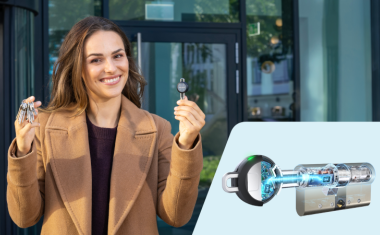
Programmable keys and digital locking cylinders can simplify access and compliance
The key to meeting building managers’ growing security and compliance challenges – without increasing workload or costs – is the implementation of smarter access
Drones instead of trackside routes: DB plans automated monitoring to prevent tampering and disruptions
DB CEO Hennies: How AI, drones & bodycams are revolutionizing rail security. A look at the new strategy