VIP-Lounge Interview: Marco Mille, Global Head of Security, Siemens AG
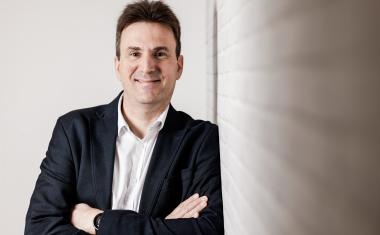
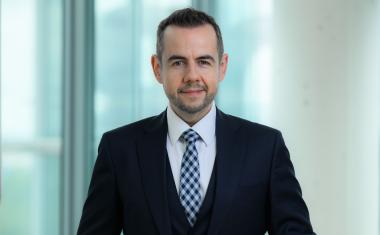
VIP in the World of Security: Marco Mille, Global Head of Security at Siemens AG
They are the heroes and sheroes in the world of security: GIT SECURITY asks important personalities for a VIP interview. In the December issue of GIT SECURITY: Marco Mille
- born in Luxembourg, married and father of two adult daughters
- Studied political science at the University of Freiburg im Breisgau and at Brock University in St. Catharines, Canada.
- Professional experience: Western European Union, Foreign Office in Luxembourg, Luxembourg State Intelligence Service.
- Since 2010 Chief Security Officer at Siemens AG in Munich.

Your career aspiration at 20 was:
To be a vet.
What made you decide to take on a job in the field of security?
I have always been fascinated by security because security and peace are the foundations of our coexistence. While studying political science, I noticed the close connection between security, international relations and history. This mix led me into the security industry.
I started my career at the Satellite Center of the Western European Union in Spain. There I was able to experience first-hand how modern technologies - especially satellite images - serve as the basis for geopolitical analyses. This work made me realize that security policy goes far beyond theoretical concepts: it means overcoming concrete challenges that sometimes decide the fate of entire regions. These early experiences formed a formative foundation for my further professional understanding of security and international cooperation.
Today, we face new types of threats such as cyberattacks or AI-supported disinformation. In our industry, we work like a holistic immune system: we identify threats before they cause damage and constantly adapt to new dangers. This dynamic is what makes my work so exciting and meaningful. It is clear to me that security is not just a profession, but a task with social relevance.
Which security policy decision or project do you think should have been implemented long ago?
Evaluating or commenting on security policy decisions does not fall within my area of expertise - I leave this task to the experts with the appropriate mandates and powers. From my personal perspective, however, I see an urgent need to adopt a fundamentally new way of thinking: the times in which we as a society were able to move exclusively in "peace mode" are a thing of the past. Current developments, such as hybrid threats, sabotage and cyber attacks on critical infrastructure or targeted disinformation campaigns, suggest that we are living in a kind of intermediate state - between peace and war. This realization should not only be discussed academically, but should finally gain a foothold among political leaders as well as the general population.
In my opinion, what we need is an integrated security policy for society as a whole that goes beyond sectoral interests and brings together various players - from politics and authorities to business, civil society and academia. Think of a kind of
"security ecosystem": a system in which prevention and resilience go hand in hand, which not only responds to short-term threats but can also ensure the long-term stability of all areas of life. The implementation of such a strategy requires clear prioritization, especially in view of limited financial and human resources. It is a matter of making bold decisions, deploying resources and skills in a targeted manner and at the same time gaining social acceptance for security concepts.
An excellent example that could provide guidance is the so-called "whole-of-society approach" pursued in some Scandinavian countries. This approach combines state and private resources to enable holistic security. Germany and Europe could learn from this, particularly in terms of promoting joint responsibility and the active involvement of all relevant stakeholders.
The current challenges, such as geopolitical instability and technological developments, leave us no time for half-hearted measures. In my opinion, we need a clear, holistic policy that not only provides short-term solutions, but also creates the basis for resilience. It is crucial that all those involved - whether from politics, administration, the armed forces, civil society or business - work together in a results-oriented way to make our society secure and stable for the future.
In your opinion, what is the best invention in the field of security?
That is indeed an exciting question. My first spontaneous answer would be: common sense. But strictly speaking, of course, it is not an invention - although it is often underestimated. Because the most effective protection always starts with correctly assessing risks and acting wisely.
When it comes to specific technologies, we need to understand that there is always a race in security: on the one hand, the attackers, who use creative and sometimes sophisticated methods to threaten assets or systems, and on the other, the defenders, who develop equally advanced tools to ward off these risks. Technologies such as AI and quantum technology are fantastic developments that have potential in the security industry, but they are also tools that can be used by attackers. This paradox, that every breakthrough invention in security always has its counterpart on the attacker's side, is what makes the industry so challenging.
However, if I were forced to name a specific invention, I would choose something unassuming but brilliantly simple: the electrostatic adhesive flipchart film. It may seem banal at first glance, but in practice it is an indispensable tool, especially in crisis situations. It can be used to transform any room into a fully functional crisis room in a matter of seconds. You can visualize information, structure decisions and react flexibly to dynamic situations. Today, in the age of AI and digital crisis management, we rarely use it, and yet it is always available should the technical infrastructure fail. In this respect, it makes an important contribution to resilience in crisis management and therefore to the resilience of the entire company.
One of your recent successes was:
I recently had the privilege of attending the Young Security Professionals Academy (YSPA) - an initiative dedicated to nurturing young talent in the security industry. This two-day event was inspiring and a real highlight for me in many ways. The open and multifaceted exchange with the participants was particularly enriching: among them were some of my own employees, but also young talents from very different companies and industries.
I was particularly impressed by the energy and fresh perspective that the young professionals brought with them. These discussions were not only instructive, but also opened up new perspectives for me - both in terms of the challenges in the security industry and future developments. At the same time, I had the opportunity to pass on my own experiences and ideas, which filled me with a sense of purpose.
For me, the success lies in the fact that such platforms are not only there to share knowledge, but also to create networks, strengthen relationships and work together on new solutions for the future. I took away many valuable insights from these two days that have sharpened my own view of collaboration in the security world. It was a great pleasure to experience how much potential there is in the next generation of security professionals - and to know that I could perhaps play a small part in furthering this potential.
Who do you think deserves an award?
Without a doubt: my wife. For 35 years, she has not only managed to accompany me with admirable patience and love, but also to actively manage and motivate me - a task that is certainly not always easy. In addition to her many years as a teacher, she also keeps our family together, intensively cultivates our circle of friends and acquaintances and manages to give everyone the support they need, especially in challenging times. She deserves an award - on behalf of all those family members and partners who support and accompany people like me who work in the professional security industry. The rhythm of such a profession - almost 24/7/365 - not only demands resilience from ourselves, but also from those who are close to us, who support us and who constantly create balance in our lives.
What do you do to relax?
I relax by reading and in nature - preferably with my wife and dog, or in the garden. Traveling with my wife is also part of it, as well as a good movie, an exciting series or, when I'm alone, a football match - the latter only on the couch, of course.
Which vacation destination can you recommend?
That depends on individual preferences, of course, but I personally am regularly drawn to Burgundy. The region offers a wonderful mix of picturesque nature, first-class wine, delicious food and a beautiful, historic backdrop - perfect for relaxing and enjoying yourself.
Which magazines do you read regularly?
I have to admit, I'm not a big magazine consumer - at least not when it comes to print media. I now consume specialist and news literature almost exclusively online
GIT SICHERHEIT is important to me because...
GIT SICHERHEIT offers a comprehensive range of information for experts and decision-makers in various areas of corporate security. It combines up-to-date, well-founded content with a modern digital format and builds an important bridge between providers and users of security solutions. At the same time, it enables the various trades to keep up to date with the latest developments - an important medium for maintaining an overview in this dynamic environment.
What was the last book you read?
I'm currently reading Sebastian Haffner's "Geschichte eines Deutschen. The Memoirs 1914-1933". The book impresses me with its personal perspective on contemporary history and is also relevant today, as it shows how political upheavals and extremist movements can shape the lives and thoughts of individuals - a topic that is also relevant again in today's world.
What is your favorite music to listen to?
I prefer to listen to old-school guitar-heavy rock and blues music - from Led Zeppelin, Deep Purple, Lynyrd Skynyrd and Eric Clapton to Joe Bonamassa and Greta van Fleet. But greats like B.B. King and Stevie Ray Vaughan are also at the top of my list.
What motivates you?
Tomorrow.
What do you worry about - and what makes you feel confident?
What worries me most is the indifference of people, which I think - rightly or wrongly - I often perceive around me. We all know that many things are going wrong in our time, be it in the environment, politics or elsewhere, and yet we often just carry on living our lives as if none of this affects us, instead of actively changing something.
However, conversations with the younger generation give me confidence. I sense a kind of spirit of optimism among them, a desire to do things differently, to set new priorities and to initiate real change. This courage and this will give me hope that change is possible.