VIP Interview: Linda Voigtlaender, Head of Risk Mitigation and Prevention, Infraserv Höchst
VIP in the World of Safety and Security: Linda Voigtländer, Head of Risk Mitigation and Prevention, Infraserv Höchst
They are the heroes and heroines of the safety ands security world: GIT SECURITY invites key figures, trailblazers, and decision-makers to a VIP interview
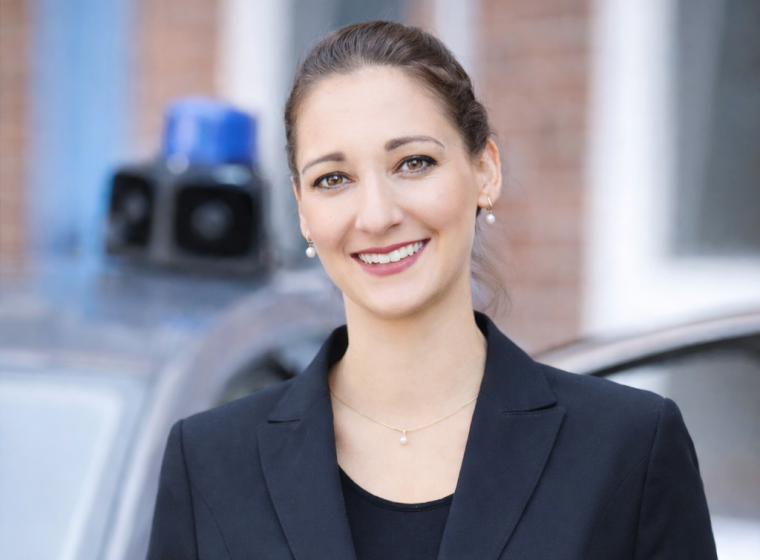
Linda Voigtlaender
Head of Risk Mitigation and Prevention, Infraserv Hoechst
- 2009: Safety/Security Specialist at Infraserv Hoechst
- Until 2015: Pursued a part-time Bachelor’s degree in Business Administration with a focus on Safety/Security Management
- Worked in the commercial department while studying, simultaneously performing security-related duties
- 2017–2020: Head of Corporate Security, managing a team of 110 employees
- 2020–present: Head of the Hazard Prevention and Mitigation Department with 150 employees
Your career goal at age 20 was:
By the time I was 20, I was already pursuing my dream apprenticeship as a security specialist at Infraserv Höchst in the Höchst Industrial Park. But that desire had emerged much earlier. Around age 14, I first developed a clear interest in working in the security field. At first, I thought about joining the police.
Over time, I explored the various fields in depth and made a conscious decision to pursue a career in the private security sector. Looking back, that was a very clear and right decision for me, one that grew out of genuine conviction.
What motivated you to take on a role in the security field?
My desire to work in the security field developed early on and became very concrete when I began my training as a security specialist. My strong sense of justice was the deciding factor. Law and order have always been very important to me. Even during my training, I was committed to furthering my development and taking on responsibility, particularly in leadership roles. I didn’t just want to be part of the team; I wanted to actively help shape and improve things and, above all, strengthen communication within security teams. Leadership plays a central role for me in this—my goal is to inspire people, create clarity, and enable us to do good work together. My guiding principle is: Lead with heart and mind.
In your opinion, which security policy decision or project should have been implemented long ago?
I believe one area that should have made much more progress by now is the consistent networking and exchange of information among the relevant stakeholders in the security sector. This applies in particular to closer cooperation between government agencies and the private security industry. Many structures are in place, but they do not always mesh seamlessly. Especially in complex or dynamic situations, this interface is crucial for acting quickly and in a coordinated manner. In my view, we need even greater clarity regarding processes and responsibilities, as well as a stronger focus on prevention and resilience. After all, security isn’t something that only emerges when an incident occurs; it stems above all from good preparation and effective cooperation.
The German Critical Infrastructure Umbrella Act (German: "KRITIS-Dachgesetz") law has already taken an important first step in this direction, as it provides a more structured and standardized framework for the cross-sectoral protection of critical infrastructure and cooperation among stakeholders. This provides a solid foundation to build upon.
In your opinion, the best innovation in the field of security is:
For me, the best developments in the field of security are those that support the people who bear responsibility on a daily basis. In other words, solutions that ease the burden, provide guidance, and deliver the right information at the right moment.
A good example is intelligent assistance systems or clearly structured control centers: They help maintain an overview in critical situations and make informed decisions. After all, security ultimately depends not only on technology—but on the people who operate it.
A recent success you’ve achieved was:
One success I’m proud of is that we not only apply our security expertise at our own location but also support companies throughout Germany and beyond its borders with security analyses.
Especially over the past year, we’ve been able to position ourselves very well in the context of digitalization, automation, and the new KRITIS requirements. To me, this shows that our work creates real added value even beyond our own department.
Who do you think deserves an award?
I believe awards often go to those who are in the spotlight. But they would be much more deserved by those who work behind the scenes to ensure that everything runs smoothly: in healthcare, in security, but also in energy supply, emergency medical services, and IT. After all, tremendous work is done there every day that often goes unnoticed because it’s specifically aimed at preventing anything from going wrong. For me, true quality isn’t demonstrated in exceptional cases, but in the fact that problems don’t arise in the first place—even if that’s something that far too rarely receives the recognition it deserves.
How do you relax?
I relax best with my horse. When riding—preferably outdoors in nature—through the woods, far away from everyday life. In that moment, nothing else matters: no appointments, no to-do lists, just rhythm, pace, and full concentration.
What vacation spot would you recommend?
Since we’ve been traveling with a toddler, my definition of relaxation has shifted slightly: what matters most now is a short trip, a kid-friendly hotel, and a beach where you can build sandcastles without a wave immediately washing them away. That’s why Greece is always a safe bet for me: gorgeous beaches, excellent food, and a sense of calm that’s instantly contagious. At the same time, though, I’ve also come to appreciate the mountains—South Tyrol is an absolute must-visit for me: breathtaking nature, plenty of peace and quiet, and incredibly family-friendly.
What magazines do you read regularly?
Of course, I regularly read *GIT SICHERHEIT* to stay up to date on the latest industry developments and understand trends in the security sector.
In addition, *Psychologie Heute* is a staple for me. Especially in a leadership position, it’s crucial to have a good understanding of people, motivation, and decision-making processes. Many issues in everyday work are less technical and more interpersonal in nature. And last but not least, I read daily newspapers to stay on top of current events, because security never exists in a vacuum—it’s always shaped by broader societal developments.
GIT SECURITY is important to you because…
…it makes complex topics accessible without unnecessary technical jargon. In a field where technologies and requirements are constantly evolving, it’s crucial to have a reliable source that contextualizes trends and provides guidance. I particularly appreciate the blend of technical depth and practical relevance. You don’t just gain theoretical knowledge, but also concrete insights that truly help in your day-to-day work.
What was the last book you read?
Most recently, I read “Factfulness” by Hans Rosling—a book that powerfully demonstrates how much our perception of global developments is often shaped by biases and how important a fact-based perspective on social issues is. To balance things out, though, I also enjoy diving into the world of fantasy—simply to let my mind escape to completely different worlds. And on a practical note: Due to a lack of time, I’ve become a big fan of audiobooks. That way, even longer stories can be easily integrated into everyday life.
What kind of music do you like to listen to most?
My taste in music is pretty suitable for everyday life. A lot of what’s played on the radio fits well into my daily routine. But if I had to choose, my heart still leans a bit toward rock. I’ve actually been a big fan of Nickelback since my teens—they’re sort of my musical classic, the one I keep coming back to.
What motivates you?
Above all, I’m motivated by the responsibility that comes with the topic of security. Seeing that processes work, that risks are identified or even prevented—these are very concrete successes for me, even if they often happen behind the scenes. Just as important to me is the team: I work with people who take their responsibilities seriously and whom you can rely on. That creates the freedom to really focus on the task at hand. And I’m someone who likes to think things through—I’m motivated by continuously questioning and improving processes. For me, this motivation comes very strongly from within.
What concerns you—and what gives you confidence?
What worries me most right now is the increasing unpredictability of the security situation—both due to global developments and to actors who are difficult to assess. Combined with economic uncertainties, this creates a dynamic that affects many areas simultaneously. What gives me confidence, however, is that we in Germany can rely on very stable structures—well-functioning institutions, a high level of security awareness, and many people who take on responsibility every day. Especially in the security sector, I see a great deal of expertise and dedication. That gives me confidence that we can handle new challenges responsibly as well.