
GIT TEST SERIES – PART 3. Perimeters extending over many kilometres are among the most demanding challenges in modern security technology. At an Optex test site, GIT SECURITY International joined independent security technology expert Markus Piendl to examine how Distributed Acoustic Sensing (DAS) and the EchoPoint fibre-optic detection system can use optical fibre to detect, locate and classify events across vast distances.
From the field trial straight to the trade fair
Would you like to find out more about EchoPoint first-hand?
Visit OPTEX at the show and experience the technology
Security Essen: Hall 7, Stand 7C35

The Japanese Optex Group has been developing intelligent sensing technologies for a wide range of applications for many decades. Its portfolio includes passive infrared detectors, active infrared beams, REDSCAN LiDAR systems and fibre-optic solutions from its subsidiary Fiber SenSys. These different sensing technologies can be combined to create multi-layered security concepts.
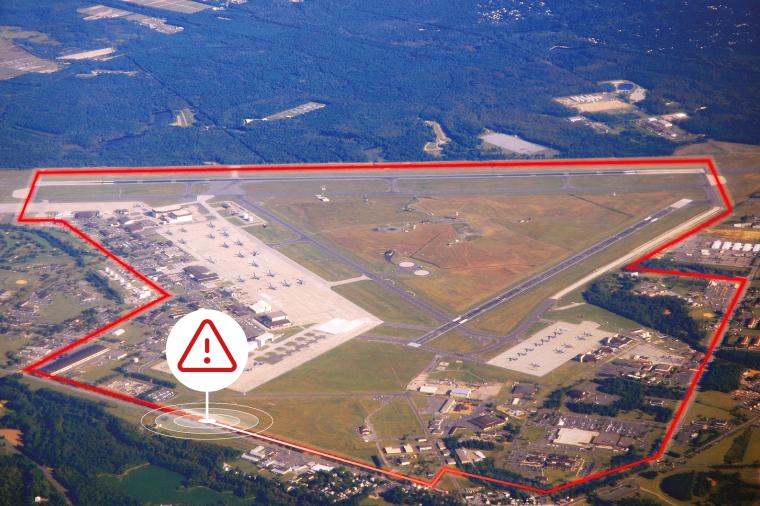
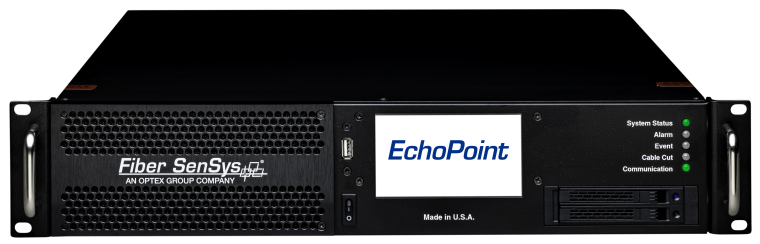
EchoPoint is the focus of this GIT field test. Within the portfolio, its role is to provide continuous monitoring of extensive infrastructure over distances of many miles or kilometres.
Practice, not promises
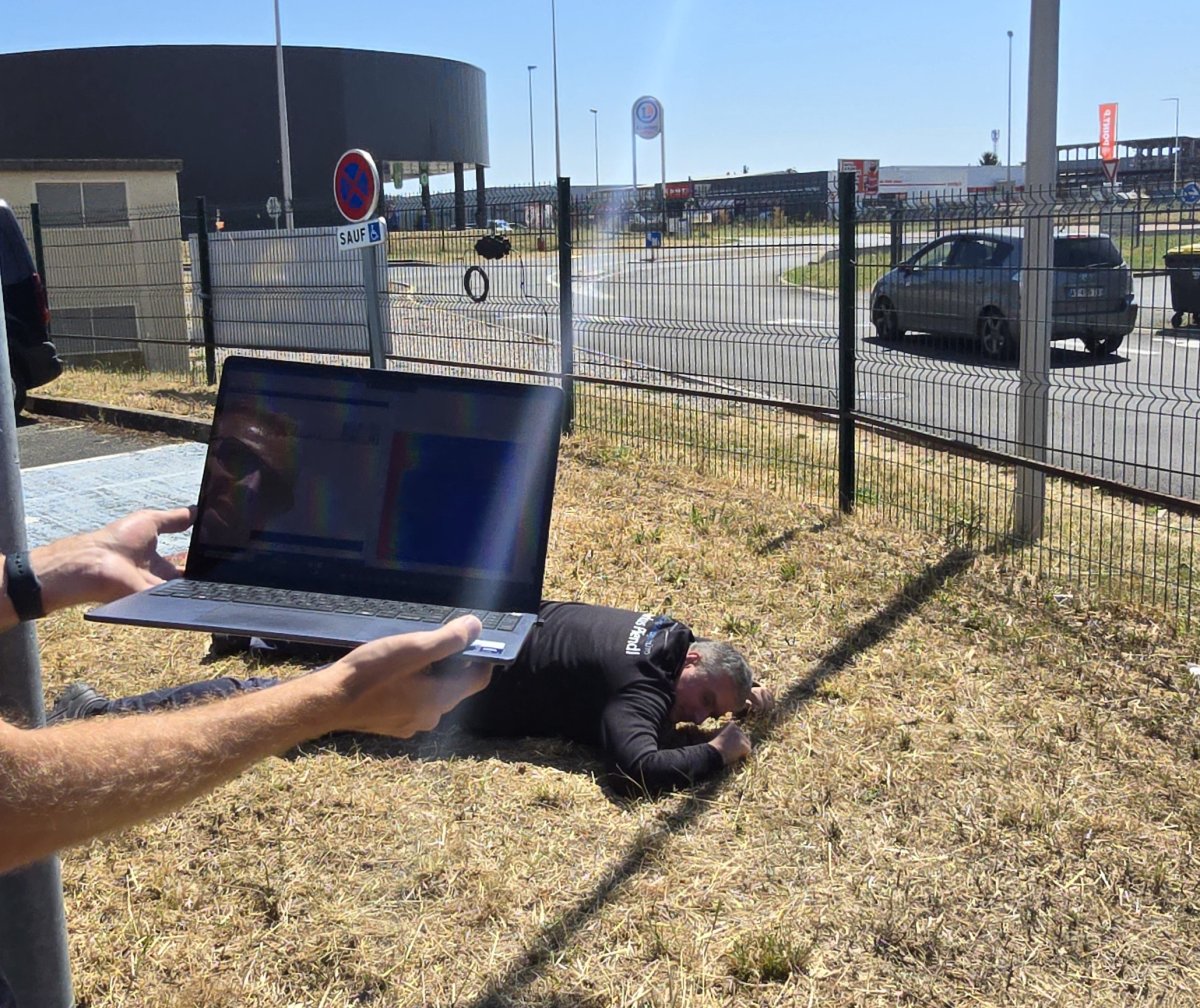
The setting was one of Optex’s professionally equipped test sites in Europe. From the moment of arrival, one thing was clear: this was a stress test, not a showroom presentation. Amid fence lines, buried optical fibre and a variety of test areas, DAS was put through its paces under realistic conditions.
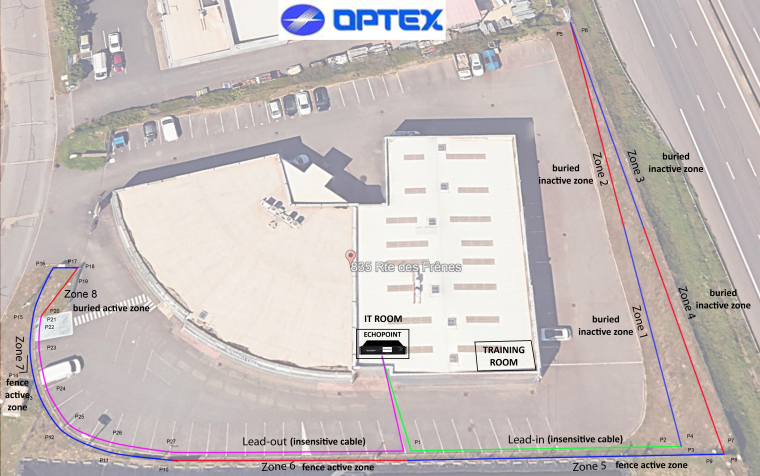
Rather than being given a conventional product presentation, expert Markus Piendl was offered a detailed view of EchoPoint’s planning, installation and commissioning. Following a technical briefing on the system architecture, detection zones and alarm management, he was able to investigate his own questions directly on the test site. Both fence-mounted sensing and buried detection were assessed under realistic conditions.
Aurélien Martin, Technical Pre-Sales Engineer at Optex, began by explaining the underlying principle. In Distributed Acoustic Sensing, an optical fibre cable serves as a continuous sensing element. Mechanical and acoustic impacts along the monitored route alter the light backscattered within the fibre. The EchoPoint perimeter protection system analyses these changes, assigns them to an event location and supports the classification of different types of events.
One key advantage: fence-mounted, buried or hybrid installation
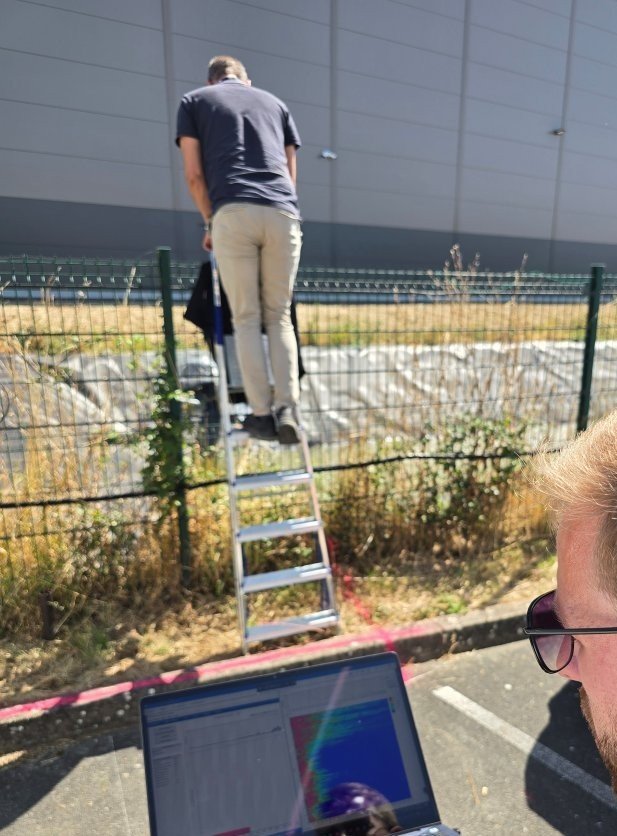
EchoPoint impressed Markus Piendl from the very first test scenarios. One of its particular strengths, he noted, is the flexibility of its installation. Depending on local conditions, the EchoPoint sensing cable can be attached to a fence, buried in the ground or deployed as a hybrid combination of both methods within a single project. “A major advantage in real-world projects,” the expert concluded. The first clear mark in EchoPoint’s favour.
There is another compelling feature: optical fibre is entirely passive. There are no active electronic components along the monitored route. As Piendl observed, this makes the technology particularly suitable for applications with stringent requirements for reliability, electromagnetic compatibility and lightning resistance. Another positive entry in the test record.
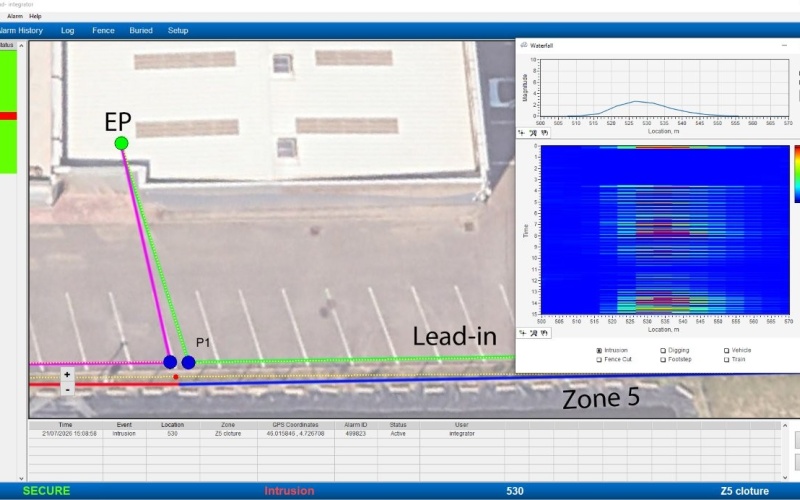
As testing progressed, Markus Piendl highlighted another benefit in his discussion with OPTEX Technical Director Geoffrey Michaud: continuous surveillance over long distances. EchoPoint supports the creation of virtual detection zones and, according to the manufacturer, locates events along the sensing fibre to within plus or minus six metres. By mapping the fibre route to geospatial position data, alarms can be linked to GPS coordinates and displayed on a site map.
Integration with video management, PSIM and control-room systems then supports targeted verification and incident handling. Depending on the system configuration, monitoring can also be designed with fault tolerance or redundancy. Another tick on tester Piendl’s checklist.
Intelligent event classification
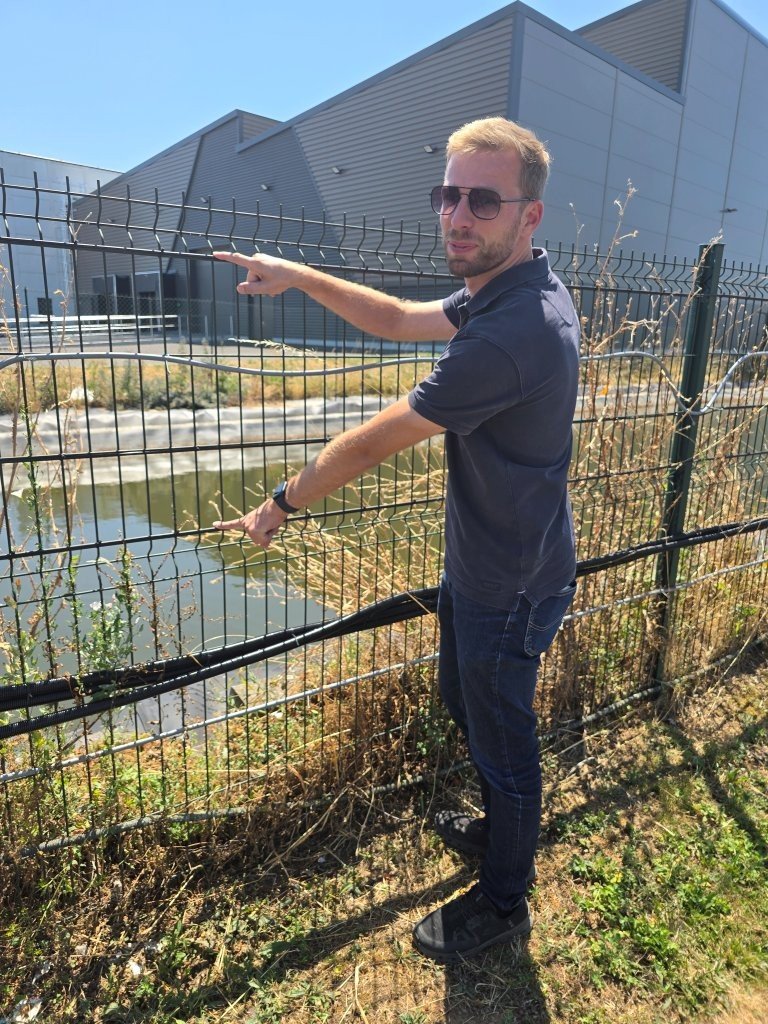
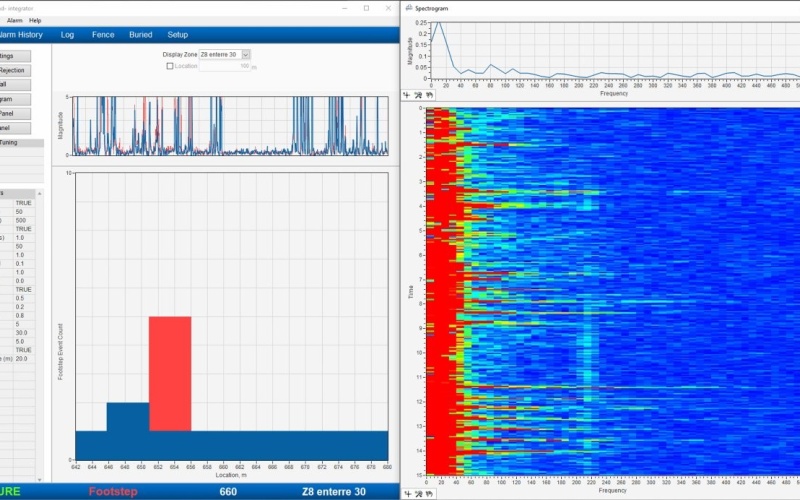
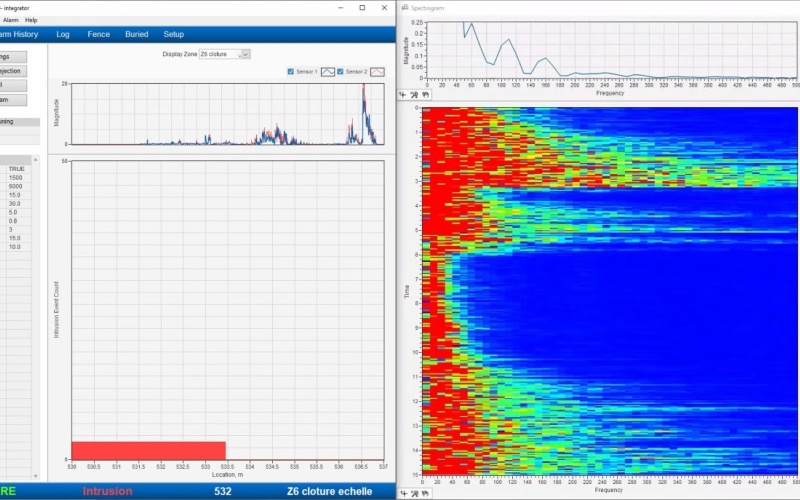
According to Markus Piendl, a key difference from conventional perimeter systems is that Distributed Acoustic Sensing does more than establish that an event is taking place. It also analyses the characteristic vibration patterns travelling along the optical fibre. Different impacts, such as footsteps, vehicle movements, excavation work or interference with a fence, produce distinct acoustic signatures. This gives the detection data significantly greater meaning.
A decisive strength in the test was EchoPoint’s continuous analysis of these signatures. The system assigns them to an event location and classifies them according to their characteristics. Alongside the position alert, security teams therefore receive an initial indication of the type of event that is likely to have occurred.
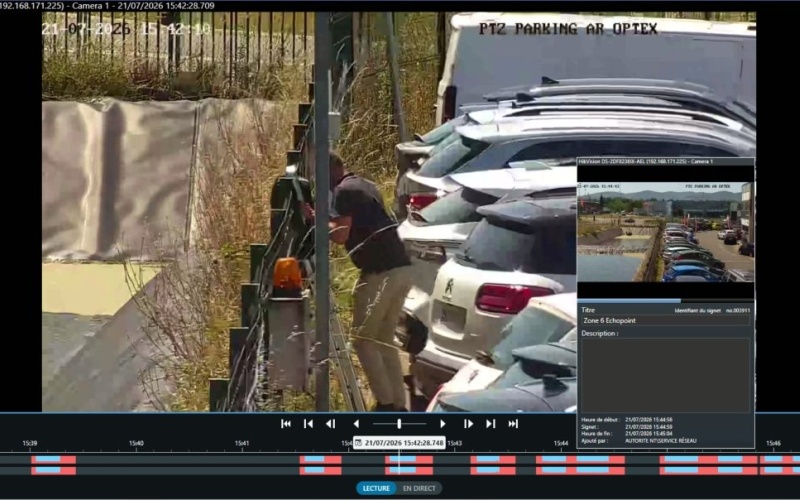
This makes the situation easier to assess and enables a faster response. Combined with video verification, it creates a multi-stage security concept: the optical fibre provides detection, while cameras or additional sensors confirm the event. The result is a lower nuisance alarm rate (NAR), allowing response teams to be deployed more precisely.
Results and findings
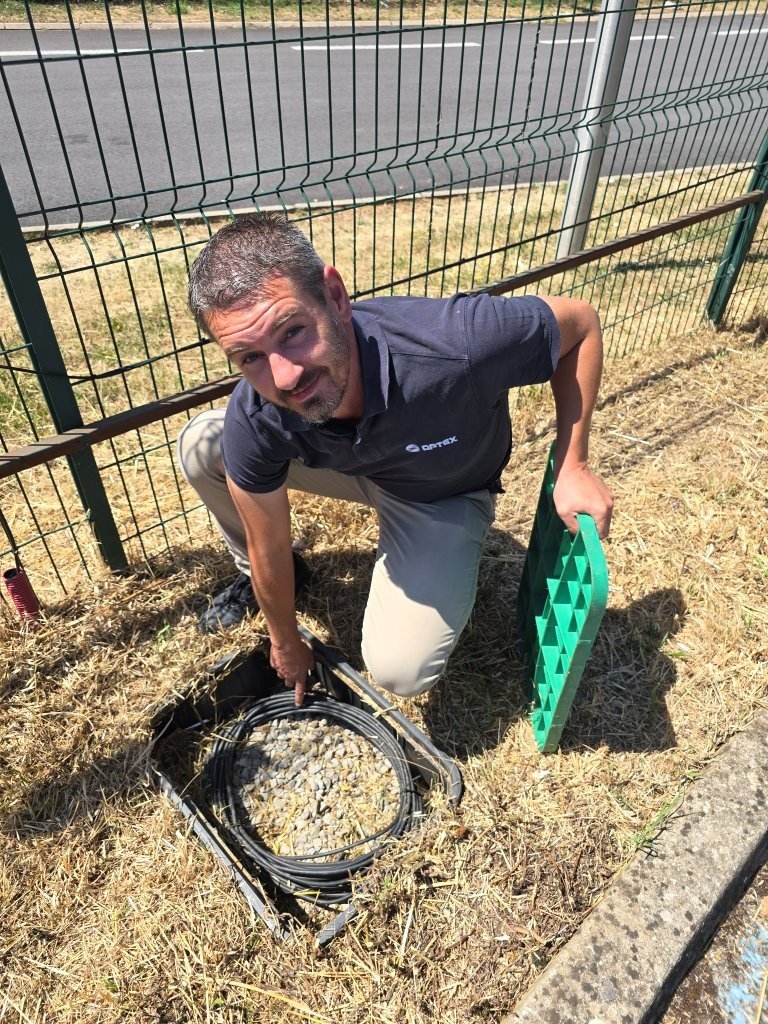
The outcome of the test programme was clear: expert Markus Piendl was thoroughly satisfied.
- EchoPoint reliably detected every prepared attack scenario on both the fence-mounted and buried sensing routes.
- Pre-alarms, main alarms and tamper alarms could be monitored in real time and assigned to the corresponding events.
- The effects of configuration changes were immediately visible.
The event positions reported by EchoPoint were compared with the GPS coordinates of the test points. At the same time, video verification provided visual confirmation of each event. The conclusion was once again unequivocal: passed in full.
The connection to Milestone XProtect management software provided a clear demonstration of how detection, verification and alarm handling can be intelligently combined, with EchoPoint as the central component.
The Test Programme for EchoPoint
Both the fence-mounted and buried configurations were tested in practice. The trials were repeated in dry, cloudless weather at 28 °C and in moderate wind. The programme covered the following points:
Fence Detection
- Sensor installation and project design
- Configuration of detection zones
- Climbing over the fence
- Positioning a ladder against the fence, including the use of a blanket as a damping layer
- Forcing open and cutting through the fence mesh
- Assessment of alarm performance
PASSED IN FULL
Buried detection
- Walking along the monitored route
- Running within the detection area
- Crawling within the detection area
- Rolling through the detection area
- Adjusting sensitivity
- Analysis of pre-alarms and main alarms
- Assessment of location accuracy
PASSED IN FULL
System integration
- Live display of sensor data
- Video verification
- Alarm handling
- Integration with Milestone XProtect
- Comparison of reported event positions with the GPS coordinates of the test points
PASSED IN FULL
Value beyond the test
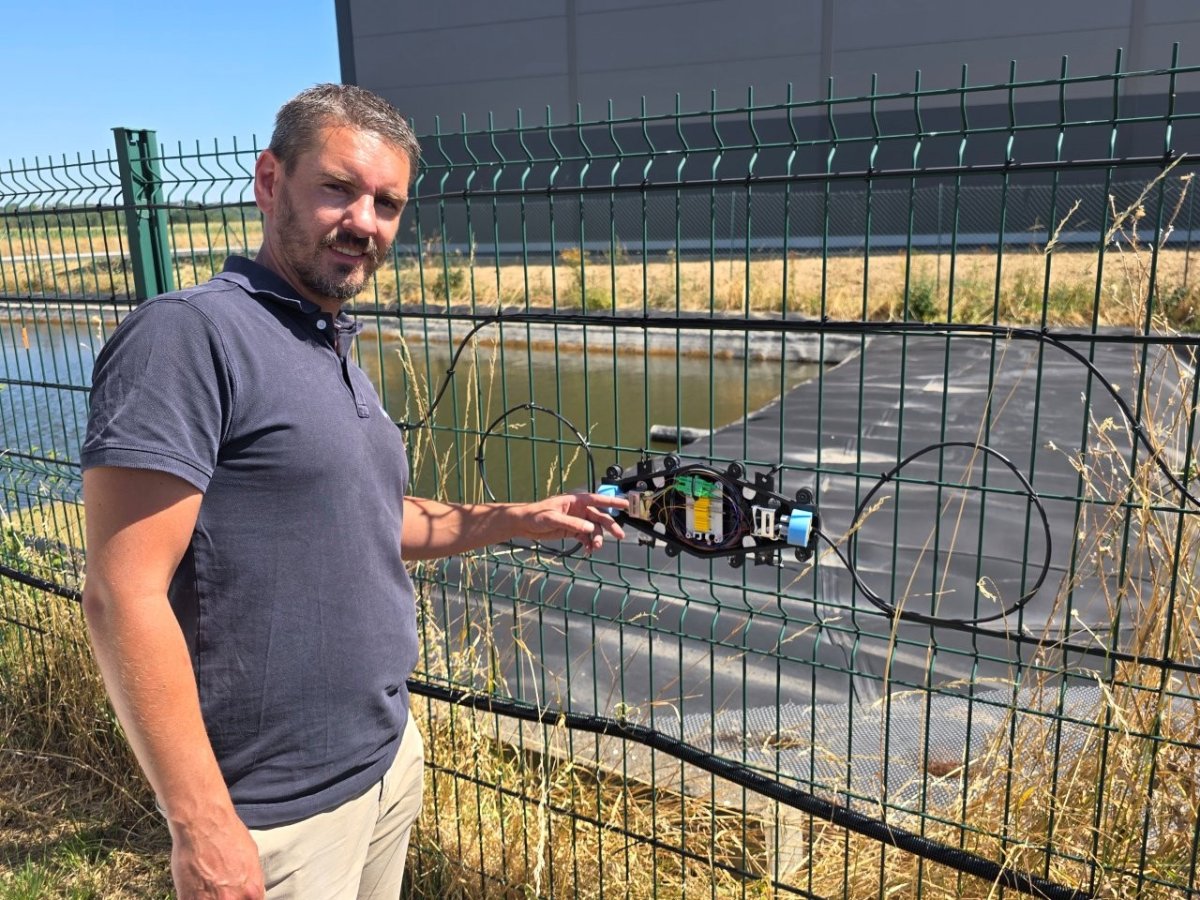
Rick Wakeham, Senior Technology Manager EMEA at OPTEX and also a witness to the independent test, endorsed Piendl’s assessment of the robustness of fibre-optic detection for extensive perimeters and the continuous monitoring of large protection zones. “At a time when extreme weather events are becoming more frequent, issues such as lightning and surge protection are gaining in importance. Owing to their physical construction, fibre-optic systems offer decisive advantages here over conventional sensor solutions.”
The testing also produced a useful potential benefit for OPTEX customers. Wakeham was particularly interested in Piendl’s proposal that artificial intelligence could in future be used to analyse log files automatically. The aim could be to help installers optimise system configuration and troubleshoot faults as early as the commissioning stage.
Piendl’s suggestion that architects and specialist planners should be made aware of the possibilities of fibre-optic buried detection at an early stage was also met with interest and approval. Piendl commented: “For sites and areas requiring protection, it is important for this technology to be considered during the planning phase, so that it can deliver an additional security benefit.”
Independent Expert Assessment: Recommendation for EchoPoint

According to Markus Piendl, Optex’s EchoPoint passed all test scenarios with flying colors. The test site itself also made a positive impression, as did the practical installation of the EchoPoint technology and the ability to conduct custom attack scenarios under realistic conditions. The expert’s detailed assessment:
“EchoPoint responded to all tested attack scenarios in a transparent and reliable manner. Particularly helpful was the ability to track pre-alarms, main alarms, and tamper alerts in real time and to cross-reference the reported event locations with the GPS coordinates of the test points. The flexible mounting options—on fences, in the ground, or as a hybrid solution—open up a wide range of applications for extensive perimeters and offer infrastructure advantages. Combined with video verification and video management, this resulted in a comprehensive and practical alarm handling process. Final conclusion and verdict: “I consider EchoPoint a clear recommendation for perimeter security projects.”
Gallery: More photos from the test







most read

AI Reality Check: Genetec CEO Pierre Racz
AI in security: Genetec CEO Pierre Racz cuts through the hype and outlines what really works in practice.

Perimeter Security in a Practical Test: How the Wehrhan-TPS urban test site makes real attack scenarios visible
NEW SERIES: TEST SITE UNDER TEST. Perimeter security with radar and video management on the Wehrhan-TPS urban test site

How Dom Eniq Transformed Access Control at Amsterdam’s Muziekgebouw Concert Hall
Muziekgebouw Amsterdam upgraded to the DOM Eniq electronic locking system, giving staff full control over access rights

Secsolutionforum 2026 to explore integrated security, resilience and regulatory developments in Italy
Secsolutionforum 2026, the event dedicated to physical and digital security, will take place on 7 and 8 October at BolognaFiere, as part of Urban Tech 2026 – The Urban Technology Show.

Fiber Optic Sensing for Critical Infrastructure: Real-Time Threat Detection Across Vast Networks
Fiber optic sensing enables real-time monitoring and early threat detection across critical infrastructure