Airport fire safety protects critical operations with early detection
Airport operations depend on interconnected passenger, baggage, cargo, and digital processes. A fire in one area can therefore disrupt activities far beyond the point of origin. Effective fire protection needs to address not only life safety and asset protection, but also the resilience and availability of critical processes.
Aspirating smoke detection (ASD), for example, provides early warning in demanding airport environments, giving operators time to investigate and initiate an appropriate response. Let us have a look at different airport areas and their specific fire risks.
Fire risks vary significantly across airport environments, from passenger terminals and baggage handling systems to cargo facilities, technical rooms, and IT infrastructure. Maintenance hangars, battery-charging stations, energy-supply installations, and car parks each present distinct fire protection challenges. As every area has unique operational requirements and risk characteristics, reliable protection requires a tailored combination of fire detection, active fire prevention, fire suppression, and hazard management solutions.
An effective fire protection strategy addresses the specific risks of each application while supporting overall airport resilience. The following examples demonstrate how integrated solutions help to detect and control fires at the earliest possible stage, minimizing risks to people, critical infrastructure, and operational availability.
Detecting Fires at the Earliest Possible Stage
Airport environments require fire detection that remains reliable even under challenging conditions. Large spaces, high ceilings, strong airflows and difficult access can delay smoke from reaching conventional detectors. Aspirating smoke detection (ASD) is particularly well suited to many airport applications because continuous air sampling and very high sensitivity ensure the reliable detection of incipient fires.
Unlike conventional point smoke detectors, which rely on smoke entering their sensing chambers, aspirating smoke detection actively draws air samples through distributed sampling points and transports them via a pipe network to a highly sensitive detector. Titanus aspirating smoke detectors, for example, can monitor large open spaces, complex airflow conditions, and difficult-to-access locations through discreet, barely visible sampling points. Maintenance and testing remain possible from an accessible location. This early warning provides valuable extra response time, allowing operators to investigate the cause, initiate appropriate measures, and help prevent escalation before passenger safety or airport operations are affected.
Passenger areas combine combustible furnishings and retail goods with high ceilings, open architecture, changing occupancy and strong air currents. Smoke can therefore disperse or become diluted before reaching conventional detectors, while false alarms can interrupt passenger flows and airport processes. The protection objective is to detect a developing fire reliably at a very early stage, support safe evacuation and maintain operational continuity. Depending on the space, point detectors, beam detectors, ASD or combinations of these technologies can be used. As soon as a fire is detected, countermeasures can be taken.
Automated baggage handling systems extend across concealed and partially inaccessible conveyor networks equipped with sorting machinery and electrical drives. Concealed friction, overheated components, electrical faults and combustible baggage contents can create risks of ignition and fire spread. Even a localized incident may interrupt baggage flow and delay flight operations. Highly sensitive ASD solutions such as Titanus can continuously monitor these areas. The protection objective is to identify smoke before it spreads along the conveyor network or causes a wider process failure. Here, too, early detection helps ensure that fire extinguishing efforts can begin quickly.
Preventing Fire in Air Cargo and Automated Storage Areas
Air cargo facilities range from handling and consolidation areas to automated storage environments. High storage densities, changing and sometimes heterogeneous goods, combustible packaging, automated equipment and electrical installations can increase the risk of fire and make intervention more difficult. In enclosed automated or difficult-to-access storage areas, a fire may remain concealed and spread before firefighting is possible. Key protection objectives are therefore to prevent the development of an open fire wherever possible, detect incipient fires early, and limit damage to goods and interruptions to cargo processes. Here, too, aspirating smoke detection (ASD) is a valuable technology for detecting developing fires at the earliest possible stage.
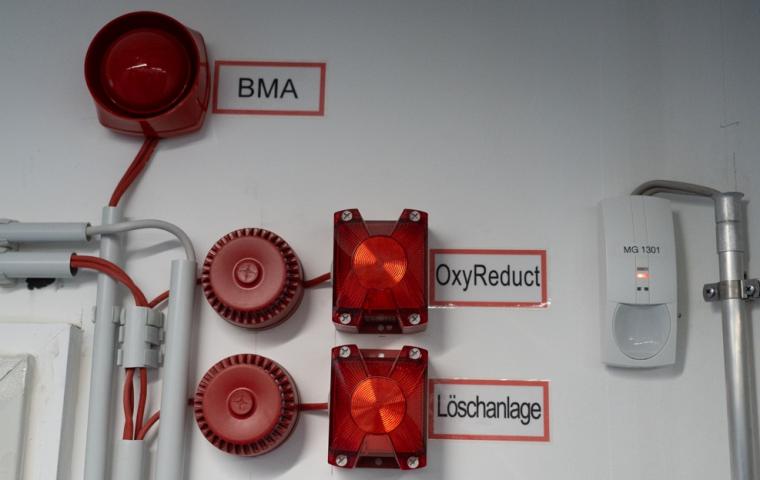
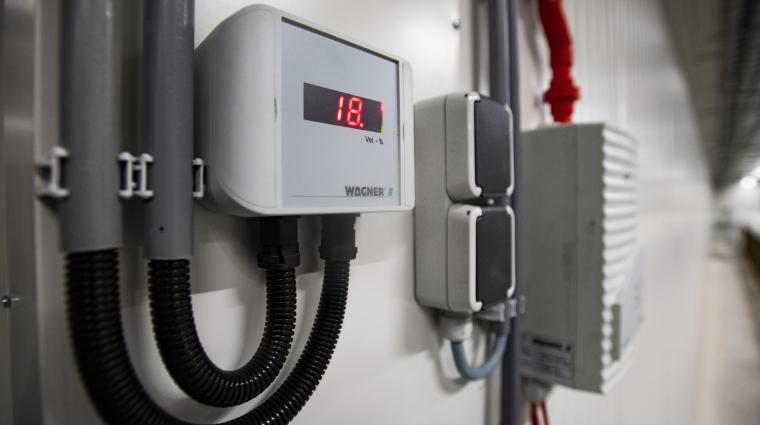
In certain enclosed logistics and storage environments, such as automated high-bay warehouses, shuttle storage systems, spare-parts storage areas or dedicated air cargo storage facilities, oxygen reduction systems such as OxyReduct can be used as a preventive fire protection technology. By reducing the oxygen concentration to a level specifically designed to prevent ignition under defined conditions, these systems make it significantly more difficult for a fire to start or spread. Access for occasional, non-continuous activities remains possible, subject to a risk assessment and appropriate occupational safety measures.
This approach may be considered in areas where continuous operation, limited accessibility, or the value of stored goods influence the protection requirements. Oxygen reduction can be combined with aspirating smoke detection: the oxygen-reduced atmosphere helps prevent a fire from developing in the first place, while ASD monitors the protected area for even the lightest signs of smoke.
Protecting Critical Technical Infrastructure
IT rooms, electrical installations, energy-supply systems and other technical infrastructure place their own specific demands on fire protection. Electrical faults, overheating components, and high cable loads can lead to slowly developing fires. Smoke, heat, or interruptions to power and data services can affect airport operations far beyond the room of origin. The protection objectives here are to detect an incipient fire before critical equipment fails, extinguish the fire in its early stage quickly, and avoid secondary damage.
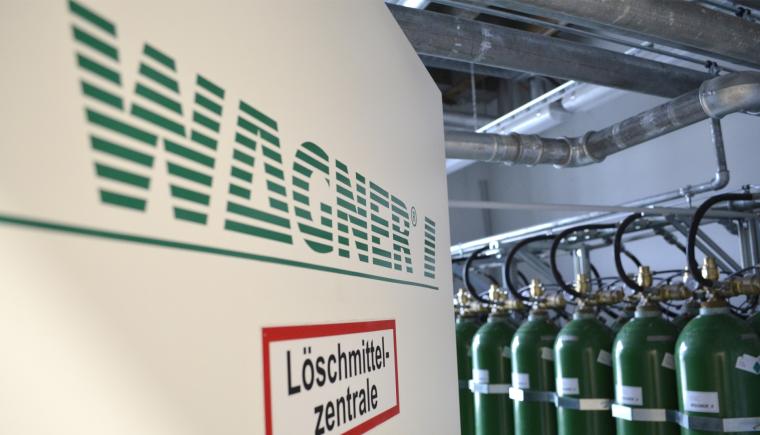
Gas extinguishing systems such as FirExting can flood suitable enclosed IT and electrical rooms with an extinguishing gas selected for the application in case of a fire. The gas suppresses the fire rapidly without the damage that conventional, water-based extinguishing methods can cause sensitive electrical and IT equipment. Another advantage is the space-efficient storage of the gas-extinguishing system. The system design is individually matched to the specific hazards, equipment, and availability requirements of each protected area. Early detection and suppression can limit escalation and the extent of subsequent firefighting measures.
Other airport environments may require different suppression methods. Terminal buildings or offices are typical applications where sprinkler systems can support effective fire protection. Their applicability and design depend on the respective fire load, building use, operating conditions, and protection objectives. As part of a comprehensive fire protection solution, sprinkler systems can complement detection as well as other suppression technologies.
Fire Protection as Part of Airport Resilience
At airports, fire safety is not only a matter of regulatory compliance. Protecting passenger areas, baggage and cargo operations, technical systems, and digital infrastructure is also essential to maintaining operational availability and business continuity. Because these functions are highly interconnected, even a localized fire can have far-reaching operational consequences.
A holistic fire protection strategy aligns detection, prevention, suppression, and hazard management with the specific risks and operational requirements of each application. Central hazard management and visualization systems consolidate information from connected fire protection systems, enabling operators to locate alarms, assess situations, initiate coordinated responses, and maintain a clear overview of system status.
In practice, ASD such as Titanus can detect the first traces of smoke, while the central hazard management system identifies and visualizes the affected area. Depending on the risk profile, appropriate suppression technology can then contain or stop the event. Early detection lengthens valuable response time, preventive measures can stop a fire from developing, and suppression systems control it using methods tailored to the protected environment. By controlling a fire at an early stage, these measures can often limit escalation and support subsequent emergency response and risk management objectives related to both operational resilience and insurance considerations.
Coordinated planning and seamless system integration minimize interfaces and ensure that all technologies support operational needs and overarching protection goals. Together, they transform individual fire protection measures into an integrated and resilient solution. By helping to prevent disruptions, limit damage, and maintain operational continuity, this approach supports the resilience of airport infrastructure and the interests of airport operators, airlines, cargo customers, and passengers alike.