App-Based Alerts: Precise Location Tracking for Events, Clinics, and Businesses
Security incidents often require rapid responses and the precise location of those affected. The SafeNow app aims to connect people seeking help with predefined contacts and local law enforcement at the touch of a button. In this interview, founder Tilman Rumland explains the technical fundamentals of location tracking, areas of application at events, in hospitals, and in businesses, as well as the business model behind the platform.

GIT SECURITY: Mr. Rumland, your SafeNow app has been extremely successful worldwide. To start off, could you tell us exactly what it does?
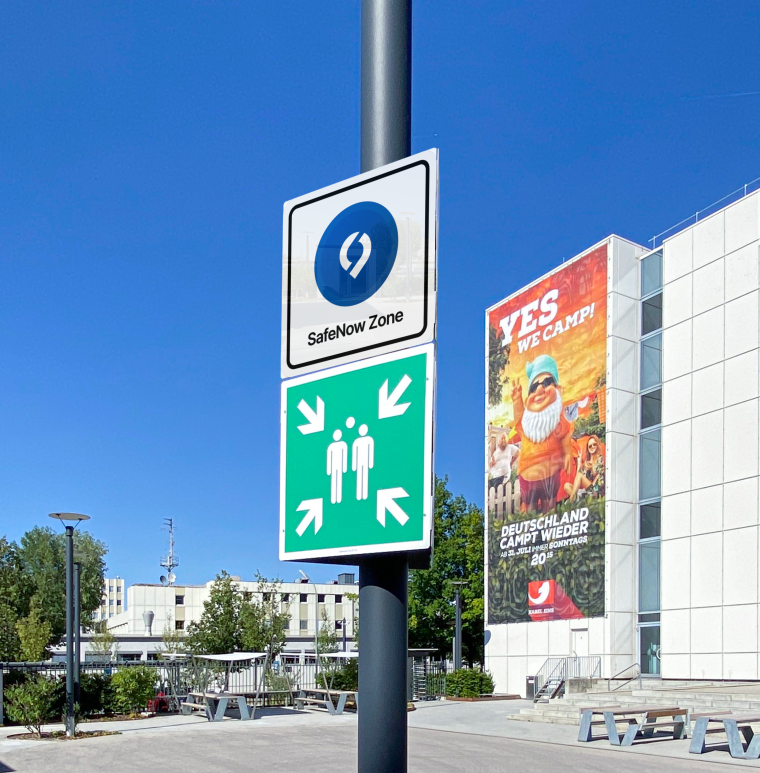
Tilman Rumland: Essentially , SafeNow lets you alert all your predefined contacts with the push of a button. They then receive a loud alarm tone—which overrides “Do Not Disturb” and “Silent” modes—and your exact location. If you’re also in a SafeNow zone—such as a soccer stadium, a club, or a festival—on-site security personnel are automatically alerted as well. By directly alerting local responders and providing meter-precise location tracking within a building, people can be helped faster and more precisely than ever before. The app is free forever for all users and is now in use worldwide, with over 1.6 million users.
Location tracking is accurate to the meter and spans multiple floors. What technical components enable this precision—and what are the requirements on-site in each case?
Tilman Rumland: The foundation is a digital fence that we draw around the respective area of responsibility. Where it’s also necessary to distinguish between specific rooms or floors—for example, in multi-story buildings or in densely populated areas like the standing section of a soccer stadium—we combine several methods. To do this, we use Bluetooth Low Energy beacons—small, energy-efficient transmitters—along with the existing on-site Wi-Fi infrastructure and our own algorithms that integrate these signals. As a result, in a stadium like this, we can locate people with a median accuracy of five meters, whether they’re in the standing area, the stands, the parking lot, the locker room, or a box seat. The beacons are easy to install, very cost-effective, and last two to ten years, depending on the type.
Let’s break this down using a large open-air festival as an example. How does it become a “Safe Zone”?
Tilman Rumland: Let’s take the Lollapalooza Festival in Berlin this July as an example. We draw a digital fence around the area the organizer wants to secure. For an open-air festival like this, GPS is more than sufficient. Once that’s set up, the area becomes a SafeNow zone, and anyone there using the app can reach the responsible security team directly with the push of a button, along with their exact location. By the way, this also applies if you’re not the one in need of help yourself, but want to get help for others at the festival.
How we implement this technically depends on the venue. For events with tents, such as the Munich Oktoberfest or the Cannstatter Wasen, we supplement GPS with our beacons, which ensure even more precise location tracking even inside the tents. There, each participating tent is its own SafeNow zone. This year, that includes eight tents at Oktoberfest and all the tents at the Cannstatter Wasen. As soon as a guest changes tents, the app automatically adjusts, much like how a cell phone automatically switches network providers when crossing into another country. The guest doesn’t have to log in anywhere and is immediately connected to the security team in each tent.
How can someone affected by an attack respond, and what happens next?
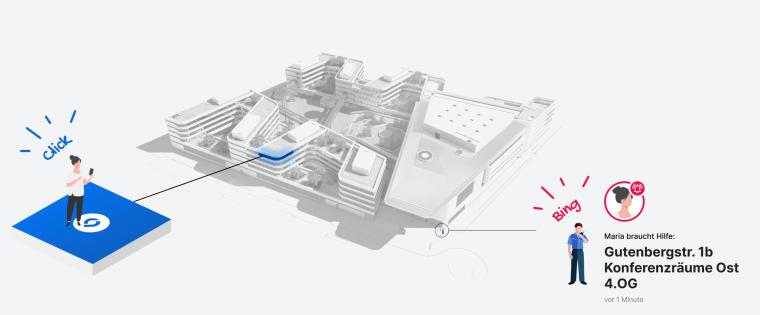
Tilman Rumland: A single tap in the app is all it takes to alert local responders—quickly and discreetly. You can also specify whether there are any injured people and, if so, how many. This allows security personnel to immediately assess whether additional security or medical personnel need to be alerted. Security personnel use a dedicated app for this purpose, which immediately shows them where the alert is coming from, the person’s exact location, and what has happened. At Oktoberfest, for example, the Aicher Ambulance Service is directly integrated into the emergency response chain via an interface. Especially in crowded areas and packed tents, this level of location accuracy can make all the difference for medical services.
This app isn’t just useful for events. Hospitals, for example, are relevant because, as you told me in our preliminary discussion, they’re a very unique setting that straddles the line between privacy and public space. How exactly is the system used in this context?
Tilman Rumland: Especially in emergency rooms, tempers are often running high, and statistically speaking, there are unfortunately a surprising number of verbal and even physical assaults on hospital staff. With Safenow, staff can trigger a silent alarm without escalating the situation or frightening other patients. Safenow is an open system and can also be used by patients themselves if they feel unsafe or need help. In addition to the app, we’ve also installed physical buttons in hospitals at strategically selected locations, such as emergency rooms, psychiatric facilities, and pediatric and women’s clinics.
What potential do you see for corporate campuses, office complexes, or similar settings? How could the app complement existing security structures?
Tilman Rumland: A good example is the ProSiebenSat.1 campus in Unterföhring. There, Safenow also covers areas that are otherwise difficult to monitor, such as conference rooms or restrooms, without the need for additional cameras or more staff. We don’t replace the on-site fire department or existing security; we integrate them into a shared platform and make them actively and intuitively accessible to all employees. First responders within the company are also directly part of this system. This is particularly relevant in modern work environments, where no one knows exactly who is in the office at any given time: our app automatically logs first responders in and out as soon as they enter or leave the premises. This makes it clear at all times how many first responders are available, and afterward, it’s easy to track exactly when they were present. Companies also see a measurable impact on employee satisfaction.
Now, the app is free—but only for the users themselves. What does the business model actually look like?
Tilman Rumland: In many cases, the operator pays for the Safenow Zone—this could be a soccer stadium, a festival organizer, or a business campus that wants to offer its guests and employees additional safety on the premises. The faster response times, the streamlined reporting channels, and the measurable increase in the sense of safety among employees and guests are of great value to the operator. The key point here is that SafeNow will always remain free for users—with no ads, no tracking of movement, no data sales, and no premium subscription. The app functions worldwide as a personal alarm system, even outside of a SafeNow Zone.In addition, there are sponsors who share the costs of the zones with event organizers or even cover them entirely. The Essence brand supported Lollapalooza in Berlin, Jägermeister supported World Pride in Amsterdam, and an insurance company sponsored a street festival in Austria. The key point here is that SafeNow will always remain free for users—with no ads, no location tracking, no data sales, and no premium subscriptions. The app functions as a private alert system worldwide, even outside of a SafeNow Zone.
You’re certainly continuing to develop the system. What new features might be coming?
Tilman Rumland: We’ll soon be releasing a physical button, either as a keychain or a lanyard. This makes the whole process even more discreet and faster: You no longer have to take out your phone, unlock it, and open the app—you can trigger the alarm directly with the button while your phone stays in your pocket. A smartwatch version is also coming soon. We believe every additional way to send an alert more quickly is worthwhile.