
CRA in Mechanical Engineering: How Companies Manage Risks, Select Secure Components and Protect OT Networks Despite the Lack of Guidelines
The CRA is a real challenge for mechanical engineering. Firstly, its details have still not been finalized and secondly, it contains aspects that are difficult to implement in OT. To make matters worse, the corresponding European standards are still a long way off. What should machine manufacturers do now?

Mechanical engineering companies are faced with the dilemma of having to prepare without knowing exactly what to prepare for. The same applies to the suppliers of the components they need to implement CRA.
Advanced companies have already carried out a CRA risk assessment for all machine series and know which risks can occur, to what extent and with what effects, and how they can mitigate these risks.
However, to make their machines and systems safer, they need electronic products, e.g. PLCs, HMIs, switches or firewalls, which themselves must also comply with CRA. When selecting products, there is a risk that they will no longer be supplied in the future because they are not CRA-compliant. Re-designs are therefore critical at the present time, as they are usually complex and take some time. It can also happen with machines in the field that spare parts are no longer available due to a lack of CRA compliance.
So the crux of the matter is: how to start without knowing the exact goal?
Continue with login
No account yet?
Protected area: Register now for free and get full access to all exclusive articles from GIT SECURITY International. With our newsletter we regularly send you top news from the safety and security industries as well as the latest e-issue.
Register







most read
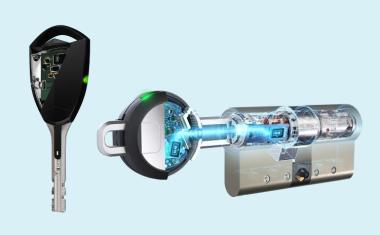
Digital Access with the Familiarity of a Key: A Versatile Combination
As organizations upscale, downsize, or onboard new locations, facility managers must more flexibly manage access control ever and frequently adapt to new situations.

Programmable keys and digital locking cylinders can simplify access and compliance
The key to meeting building managers’ growing security and compliance challenges – without increasing workload or costs – is the implementation of smarter access

Certification you can specify with confidence, wherever you're building
Specifying fire detection across Europe is rarely as simple as choosing a product that works.

Fiber Optic Sensing for Critical Infrastructure: Real-Time Threat Detection Across Vast Networks
Fiber optic sensing enables real-time monitoring and early threat detection across critical infrastructure

Secsolutionforum 2026 to explore integrated security, resilience and regulatory developments in Italy
Secsolutionforum 2026, the event dedicated to physical and digital security, will take place on 7 and 8 October at BolognaFiere, as part of Urban Tech 2026 – The Urban Technology Show.