
Silent Threats
Threats rarely present themselves in a single, predictable way. While some are immediate and overt, others develop gradually and remain unnoticed until their impact is felt. They vary in speed, scale and direction, which makes reliance on any one security measure insufficient. Effective security responses, says Hanna Bjuke, Sales Director for High Security Solutions, Gunnebo Safe Storage in Europe depends on a layered approach, where different elements work together to address different types of risk and ensure the right level of protection is in place at every point.
Before 1985, only individual components such as doors could be certified, not the security architecture, leaving many older vaults with an inherent and often unseen vulnerability. As a result, their true level of resistance is difficult to determine with confidence.
Recent events have reinforced how adept organised criminal groups are at assessing systems in their entirety, identifying points of weakness and exploiting them. Where the overall architecture has never been certified, such weakness may be far more accessible than anticipated. Construction methods material properties environmental conditions and operational routines are studied to enable slow controlled progress that avoids attention. Rather than breaching access points attackers may target structural boundaries that sit outside traditional access focused security models.
content:
- Detection and Interpretation Over Time
- Response as a Risk Control
- Operational Routines and Residual Exposure
- SafeStore Auto eliminates direct human access through a fully automated vault design, raising physical protection to a higher level
- Confidence Trust and Institutional Impact
- Regulatory and Standards Context
- Looking Ahead
- Compliance to Latest Security Standards

Planned criminal activity is timed to coincide with predictable reductions in oversight such as weekends, holidays extended closures or periods of reduced staffing. Under these conditions interference can continue unnoticed for long durations particularly when detection systems are configured to respond only to sudden change. Gradual drilling cutting or manipulation produces low level vibration acoustic emission and minor structural movement. Similar signals may be generated by benign sources including building services maintenance activity or nearby works. When viewed in isolation these indicators could be easily dismissed. Risk accumulates when indicators are not interpreted over time. Security strategies benefit from contextual analysis, particularly where threats develop gradually and remain low visibility.
Detection and Interpretation Over Time
Effective protection depends on the ability to correlate information rather than react to single events. Vibration acoustic structural and environmental data provide greater value when assessed collectively across extended periods. Patterns trends and repetition often provide stronger indicators of interference than any individual signal. Establishing reliable baselines is critical, especially where background conditions vary significantly between facilities and over time. This baseline, supported by a modern and reliable intrusion alarm system and clear internal procedures designed to reduce the risk of fraud, creates a stronger and more resilient overall security foundation. Intelligent systems support interpretation by distinguishing cumulative anomalies from routine background activity. Their value lies in supporting informed decision making grounded in context.
Response as a Risk Control
The purpose of physical protection is to introduce delay, slowing an intrusion for long enough to allow an effective response. Higher-grade vaults are designed to withstand attack for longer periods, which is particularly relevant given that many older vaults were never formally certified. In those cases, resistance times can be extremely limited, increasing the likelihood intruders have already left the site before the police arrive. Monitoring needs to always be continuous rather than periodic and remotely available by authorised personnel. Centralised oversight supports this requirement particularly during periods when on site presence is limited. Real time visibility allows emerging risks to be assessed before routine inspections would otherwise occur. Clear escalation structures allow for single events to be highlighted alongside indicators observed over a longer period. Decision-making is then shaped by accumulated evidence, enabling more informed responses, reducing the likelihood of errors and ensuring operational interventions are proportionate and timely.
Operational Routines and Residual Exposure
Operational routines influence exposure within high-value storage environments in ways that are not always immediately visible. Inspection frequency, periodic checks, and reliance on certified construction can affect how emerging issues are identified and addressed over time. Secure facilities should be understood as dynamic systems, with risk profiles that evolve in response to changes in usage, maintenance practices, staffing structures and the surrounding environment. Safe storage environments are built around layered protection and continuous assurance. Continuous monitoring, regular servicing and periodic reassessment of threat assumptions ensure alignment between physical protection and detection capability. For private investors the implications may not be immediately visible. Assets placed in secure storage frequently hold long term financial legal or personal importance. Prolonged undetected access can therefore result in consequences that extend well beyond direct financial loss.
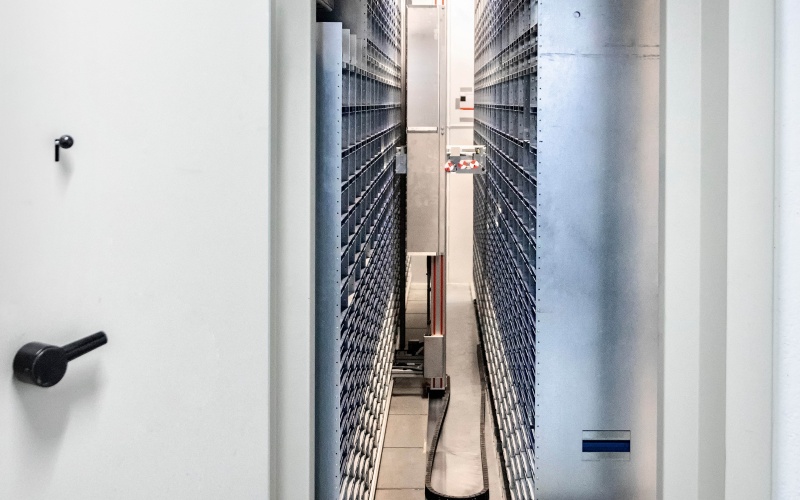
SafeStore Auto eliminates direct human access through a fully automated vault design, raising physical protection to a higher level

Confidence Trust and Institutional Impact
Confidence in safe storage depends on visible control as much as physical strength. When incidents reveal prolonged undetected interference attention quickly shifts from construction standards to oversight effectiveness. Banks and private storage providers face increased scrutiny following such events particularly where multiple customers are affected. Questions focus on whether warning signs were present and how they were assessed rather than whether structures met certification requirements. Rebuilding confidence depends on demonstrable improvement in integrated detection monitoring, visual verification capabilities and response rather than reassurance alone. Institutions that can evidence continuous oversight and informed escalation are better positioned to maintain trust.
Regulatory and Standards Context
Regulatory frameworks and industry standards increasingly reflect an integrated view of physical security. Resistance ratings are complemented by expectations around detection response and ongoing management. European and international guidance emphasises the relationship between structural protection monitoring capability and operational control. Compliance assessments increasingly consider whether ongoing interference can be identified and addressed rather than relying solely on certified resistance performance.Operational context plays a central role in this assessment. Facility layout staffing models asset types and local threat conditions all influence residual risk. Controls that are not adapted to these variables may leave exposure unaddressed despite formal compliance.
Looking Ahead
As threat methods continue to evolve, institutions that regularly review and adapt their security assumptions are best positioned to sustain resilience over time. High value storage environments are often designed with long service lives in mind. Construction decisions made decades earlier may still define the protective envelope today. While certified resistance does not expire operational reality around those structures changes continuously. Older structures may not be as resilient as assumed, particularly as tools, techniques and the value of stored assets change. Staffing models shift as institutions pursue efficiency and automation, while the rapid growth of digital systems makes robust authorisation, strong digital protection and clear access procedures increasingly essential. Each of these factors influences how interference signals appear and how easily they can be recognised. Ongoing service and maintenance allow detection strategies to adapt to changing operational and environmental conditions.
Compliance to Latest Security Standards
Banks and private investors encounter both governance and technical considerations in security management. Decisions are often shared across property management, security operations, compliance and executive leadership. When responsibilities are well-coordinated and embedded into operational foundations, risk assessment can be more proactive and continuous. Strengthening visibility and collaboration helps address potential gaps before they are exploited. Insurance considerations increasingly reflect expectations around monitoring and preventative controls. Prolonged undetected activity can lead to disputes over whether reasonable protective measures were in place particularly where losses span multiple accounts or clients. Documentation of monitoring oversight and response processes therefore becomes as important as construction certification. For private investors and family, offices reliance on third party storage providers introduces additional dependency. Due diligence focuses on physical specifications location and reputation. Transparent governance and demonstrable monitoring practices provide an important basis for confidence. From a regulatory perspective physical security, supervisory attention increasingly considers whether institutions can evidence control over risk throughout the lifecycle of an asset or facility. Detection and response capability form part of this expectation even where explicit prescriptive requirements are limited. Standards bodies have begun to reflect this shift by emphasising the relationship between resistance detection and response rather than treating them as independent domains. Compliance is moving toward a performance based assessment of resilience rather than a binary evaluation of construction features. Institutions that continue to treat physical protection as a one-time investment may find themselves exposed despite formal compliance. Those adopting a systems-based view, inclusive of initial design, specification, maintenance and monitoring are better positioned to adapt as threat methods change.
In summary, as regulations, market pressures and risk factors continue to evolve, innovation must be introduced, aligned with latest developments in integrated security technology, Ai and machine learning, inclusive of connectivity and cloud-based platforms. Balancing these forces requires informed leadership and a willingness to revisit assumptions, based on the definition of safe storage.
Gunnebo Safe Storage continues to engage with financial institutions regulators and standards bodies to contribute to this ongoing reassessment of physical security. Solutions such as SafeStore Auto incorporating Planar Protection reflect an approach where structural resistance, intelligent monitoring and operational oversight function as a unified system. In an SafeStore Auto, no individual has direct access to the vault interior, which elevates the level of physical protection well beyond traditional safe deposit lockers.
Within this integrated framework, early awareness, informed response and alignment with evolving regulatory expectations become attainable objectives, delivering ongoing and trusted peace of mind.
Business Partner
Gunnebo Safe Storage
Sweden





most read

Perimeter Security in a Practical Test: How the Wehrhan-TPS urban test site makes real attack scenarios visible
NEW SERIES: TEST SITE UNDER TEST. Perimeter security with radar and video management on the Wehrhan-TPS urban test site

How Dom Eniq Transformed Access Control at Amsterdam’s Muziekgebouw Concert Hall
Muziekgebouw Amsterdam upgraded to the DOM Eniq electronic locking system, giving staff full control over access rights

Secsolutionforum 2026 to explore integrated security, resilience and regulatory developments in Italy
Secsolutionforum 2026, the event dedicated to physical and digital security, will take place on 7 and 8 October at BolognaFiere, as part of Urban Tech 2026 – The Urban Technology Show.

Programmable keys and digital locking cylinders can simplify access and compliance
The key to meeting building managers’ growing security and compliance challenges – without increasing workload or costs – is the implementation of smarter access

Fiber Optic Sensing for Critical Infrastructure: Real-Time Threat Detection Across Vast Networks
Fiber optic sensing enables real-time monitoring and early threat detection across critical infrastructure