Data center security: White paper on perimeter protection and lidar
Data centers were reclassified as critical infrastructure by the European Union and the UK Government in 2024 because they are vital to the future economy and to safeguard essential data, ranging from medical records, financial information, and services such as rail transport and telecommunications.
The entire EMEA region is investing heavily in data centers, and this multi-billion-pound market is expected to double by 2030. Across the region, countries are taking steps to secure their future by strengthening regulations about storing sensitive data. Reclassifying data centers as critical infrastructure means that data center operators will need to maintain stringent, regulated security measures and operational standards going forward.
The paper, entitled ‘Physical security for data centers: A new era’, explores the risks of unauthorized access, sabotage and operational disruption, and sets out practical guidance on strengthening perimeter protection, securing restricted areas and server rooms, and improving overall resilience across the entire site. It also examines the role that advanced detection technologies such as lidar can play in helping operators to reduce false alarms, identify genuine threats more accurately, and respond more quickly to potential incidents.
Spot The Problem
“Data centers are expected to deliver resilient, always-on operations, so physical security needs to be just as robust as the digital defenses protecting the data inside,” says Mark Cosgrave, Marketing Director of Optex EMEA. “With sites becoming more complex and security teams under pressure to respond quickly and accurately, advanced detection technology can support a more layered and reliable approach to detection.”
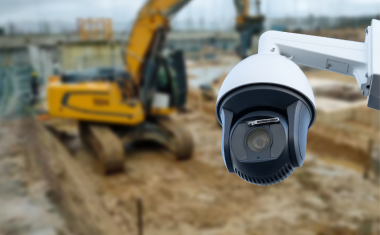
And the problem goes beyond the immediate boundary of the data center site. All such buildings need a reliable source of power, and not just a little. In some parts of the world, a readily available and reliable power supply is not a given, and so some operators are investing in their own solar generation sites, specifically to meet at least a significant amount or all of their own needs. They can use suitable roof space if it is available, or they can build a nearby ‘solar park’, with all that this entails. Here again, security cannot be ignored and, at these larger, more remote sites where perimeters encircle solar farms, power generators, or substations feeding the data center with electricity, modern fiber optic technology such as Optex’s own EchoPoint series can be installed on or beneath fences.
Light Work
Modern laser technology such as lidar can quickly and reliably identify individuals scaling a fence, crossing a site, tampering with power infrastructure, climbing onto the roof, or attempting to unlawfully enter the building. Laser technology can also enhance the security of on-site power generation, control authorized access points into and within the data center, and even individual server racks – Optex’s Redscan sensors are already approved for use at such critical infrastructure sites.