How a new initiative by Denios aims to support operators of hazardous materials storage facilities throughout the entire life cycle.
Today, hazardous materials storage operates at the intersection of hazardous materials regulations, water law, building codes, fire safety, insurance requirements, and operator responsibilities. At the same time, pressure is mounting on companies to assess risks transparently and document safety measures in a traceable manner. A new initiative by Denios, ARU, and RiskNexus—supported by GIT SICHERHEIT—therefore aims to develop a practical model that guides operators through all phases of hazardous materials management.
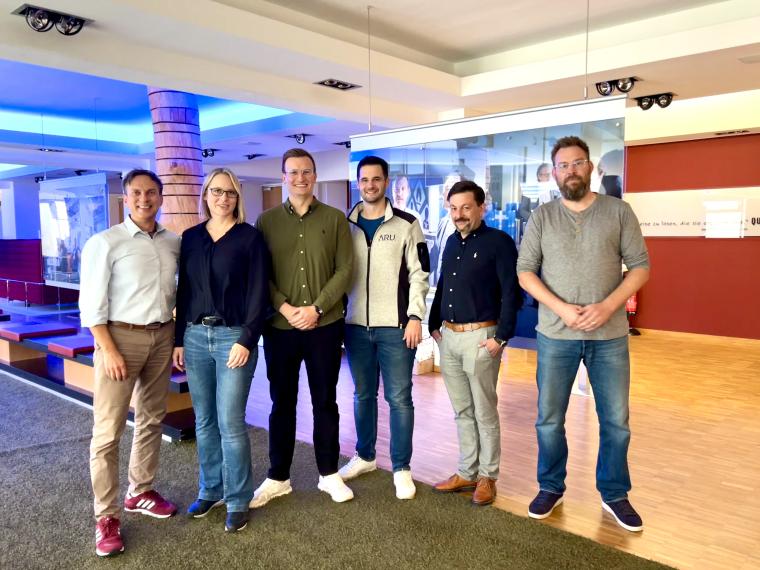
The initiative was launched even before the joint workshop that Denios hosted in Bad Oeynhausen on August 21, 2026. There, Maren Schlichting, Florian Schwarz, and Markus Boberg from Denios, together with Tobias Dankert from ARU, Maik Reimann from RNX, and Steffen Ebert from GIT SICHERHEIT, defined the content guidelines for the model. The goal is to provide operators with guidance throughout the entire lifecycle of hazardous materials storage facilities and containers.
Taking a Holistic Approach to Hazardous Substance Management
Many companies today are faced with increasing complexity. Operators must not only comply with legal requirements but also take into account the expectations of insurers, regulatory agencies, and internal stakeholders. However, there is often a lack of guidance that brings these perspectives together.
This is precisely where the initiative comes in. The goal is to develop a guide that covers the entire lifecycle of a hazardous materials container or a hazardous materials storage facility. Rather than addressing isolated, individual topics, the aim is to provide a comprehensive overview—from initial planning through to long-term optimization.
Planning as a Critical Phase
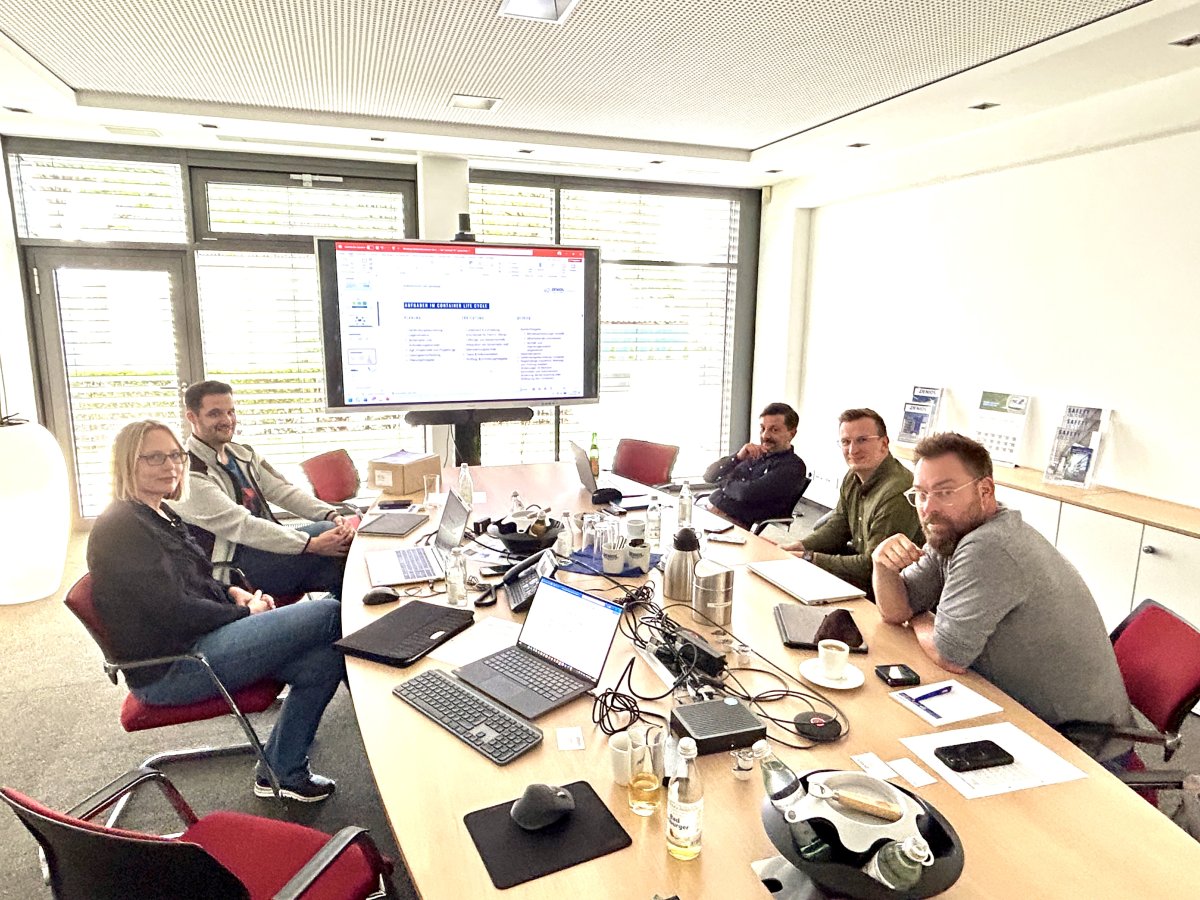
A key finding of the workshop: Most problems that arise later do not originate during operations, but much earlier. Crucial decisions are made as early as the planning phase.
These include questions such as:
- What materials are to be stored?
- What quantities are involved?
- Which regulations apply?
- What safety objectives must be taken into account?
- What additional requirements are imposed by insurers or regulatory agencies?
Operators are often familiar with individual regulations but find it difficult to grasp the interplay between hazardous materials law, water law, building codes, fire safety, and insurance requirements. The planned guidance for operators is therefore intended, in particular, to provide clarity and systematically organize the relevant issues.
Another key focus is the transition from planning to implementation. Here, issues such as permitting, requirements under the AwSV, technical specifications, and matters related to documentation and record-keeping often come to the forefront.
It therefore makes sense to structure future content around milestones and decision-making processes. Operators should be able to understand which documents are required, which stakeholders need to be involved, and which steps typically take the most time.
Operations require constant attention
Special attention is given to day-to-day operations. According to experts, many companies view the purchase of a hazardous materials container as a completed project. In fact, however, many operational responsibilities only begin once the container is put into service.
Regularly recurring tasks include, among others:
- Hazard assessments
- Training sessions
- Maintenance and inspections
- Documentation requirements
- Change management
- Review of Storage Contents and Operating Conditions
Changes in material properties, new regulatory requirements, or modified operational procedures can also impact existing storage concepts. This is an area of action that has often been underestimated in the past.
Insurance and risk transparency are coming more into focus
The insurability of hazardous materials storage facilities is also of particular importance. In addition to legal requirements, operators must increasingly take underwriting requirements into account. At the same time, many companies lack transparency regarding the criteria insurers use when assessing risks.
The model is therefore also intended to clarify the role of risk assessments, documentation, and record-keeping. The goal is to foster a better understanding of risks and potential requirements for safety systems, fire protection measures, and organizational processes early in the project phases.
Safety Culture as a Key Pillar
In addition to technology, compliance, and organization, there is another aspect worth highlighting: the company’s safety culture.
Many incidents are not caused by technical defects, but rather by unclear responsibilities, a lack of training, or organizational shortcomings. For this reason, the topic of safety culture should be integrated into the Vision Zero framework as a separate component in the future (see report: Vision Zero in Hazardous Materials Management: Why Minimum Legal Requirements Are Not Enough).
This broadens the focus from purely technical considerations to the question of how safety can be permanently embedded within the company.
Sharing Knowledge Through a Series of Content Pieces
The participants do not view the model development as a standalone project. Rather, the plan is to build upon it to create a content journey consisting of technical articles, white papers, webinars, case studies, and expert discussions. The target audience includes, in particular, HSE managers, operators of hazardous materials storage facilities, safety engineers, environmental officers, plant managers, and planners.
This shared objective can be distilled into a central question: What do operators need to know, decide, and document at every stage of the life cycle to ensure that compliance actually translates into safety? This is precisely what will serve as the basis for a practical guide to hazardous materials management to be developed in the coming months.