Security Management in a Fragmented World Order
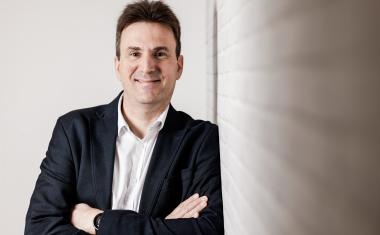
Today, companies are facing a new reality: a long-standing, stable international order is crumbling—and geopolitical risks are directly impacting supply chains and information spaces. All of this calls for a security management approach that prioritizes resilience over efficiency and strategically integrates risks. An article by Dr. Konstantinos Tsetsos, Head of Foresight at the Metis Institute at the University of the German Armed Forces in Munich and Managing Director of Sicyon Risk Consulting.

For decades, the international order served as a stable foundation for German businesses. Open sea lanes, a predictable reserve currency, enforceable contract law, a functioning alliance system, and a U.S. security guarantee made the geopolitical backdrop so reliable that it could be treated as a constant. This constant has disappeared. Geopolitics has evolved from an abstract framework condition into a direct operational risk factor that simultaneously affects location decisions, supply chains, investments, and the internal security of organizations.
The starting point is a structural observation: the rules-based order established after 1945 and 1990 is eroding. It is not being replaced by a single catastrophic event, but rather by the gradual slipping below those thresholds beneath which security, prosperity, and the ability to act can no longer be taken for granted. This results in a fundamental shift in security management, as decisions in the future will no longer be measured by their optimality under normal conditions, but by their sustainability under simultaneous external and internal stress.
content:
- Three Structural Shifts
- Hybrid warfare directly impacts businesses
- Scenarios and Their Operational Implementation
- Shift in Priorities and Recommendations for Action
- Diversify supply chains
- Make Geopolitics a Top Priority
- Embedding Information Resilience in Risk Management
- Scenario-Based Control
- Design in the Face of Uncertainty
From an analytical perspective, the current situation can be interpreted as a phase of power transition. International orders are structured by continuous shifts in relative material power (see figure). A dominant nation establishes a hierarchical order, projects its preferences onto the system, and provides systemic public goods from which companies also benefit directly—namely, freedom of navigation, a stable reserve currency, technological standards, and a reliable legal framework. If this leading power’s relative advantage in power declines, the likelihood increases that a dissatisfied great power will challenge the order.
Due to China’s disproportionate increase in power since 2000, the current international system is already in an early phase of transition, manifested in regional conflicts, economic competition, and a decline in the effectiveness of the public goods provided by the United States. The world is not yet multipolar, but it is no longer indisputably unipolar either. In this era of negative peace among great powers, tried-and-true conflict resolution mechanisms are failing, international organizations are becoming dysfunctional, and globalization is giving way to a creeping deglobalization. For corporate security management, the crucial implication is that the erosion of these very public goods is not an abstract regulatory issue, but has a direct impact on supply chains, market access, and legal certainty.
Three Structural Shifts
The theory of power transition gives rise to three developments that will shape the security and economic policy landscape of the coming decade. First, the transition from unipolar dominance to a bipolar system reduces the predictability of the international order. A visible manifestation of this trend is the economic and military-strategic consolidation of antithetical power blocs (CRINKPAK in terms of security policy and BRICS+ in terms of geoeconomics), which constitute an alternative order to the Western-led one. For companies, this means the consolidation of economic and security-policy camps in which market access, technology, and capital are increasingly organized along political lines.
Second, an erosion of norms is to be expected, in which obligations under international law and institutional commitments are increasingly interpreted selectively. As a result, law becomes an instrument of strategic competition, with sanctions, secondary sanctions, and tariffs evolving from exceptional measures into permanent means of power projection. As a result, companies find themselves directly in the line of conflict—for example, as targets of primary or secondary sanctions, or as leverage through which competing states deliberately withhold raw materials and rare earth elements.
Third, we can expect an intensification of shocks. Conflicts, pandemics, climate impacts, and technological disruptions are occurring more frequently, are more closely interlinked, and come with shorter warning times. The traditional assumption that risks can be viewed in isolation and addressed one after another no longer holds, as their interactions have become decisive.
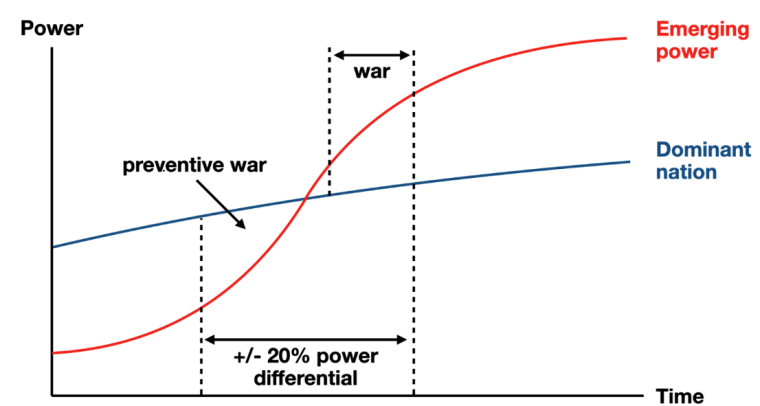
shifts in relative material power (author’s own representation)
Hybrid warfare directly impacts businesses
The most significant shift in corporate security management is that companies are no longer mere spectators of geopolitical conflicts but are becoming primary targets and actors. Modern conflict resolution is shifting toward operations that fall below the threshold of open violence.
It is important to distinguish between two main approaches. The first aims to physically weaken and paralyze. Its methods include surgical attacks on critical infrastructure, cutting off supply lines, cyberattacks on financial, control, and logistics systems, as well as disinformation and strategic corruption of decision-makers. The goal is to disrupt and slow down operational and societal decision-making processes without leaving a clear trace of who is responsible.
The second approach is more subtle, has a psychocognitive effect, and is more dangerous in the long term. It aims to control the opponent’s perception. Disinformation, cognitive influence, and the instrumentalization of social media are designed not to disrupt individual systems, but to shape the reality of entire publics. The attribution problem is a central—yet intangible—means of influence here. Generative methods simultaneously lower the costs and increase the credibility of manipulation, while autonomous systems and the proliferation of drone technology also provide non-state actors with disruptive capabilities. For corporate security, this means that reputation attacks, manipulated information spaces, espionage, and the targeted undermining of trust in one’s own organization will become part of the standard repertoire of threats in the future.
Scenarios and Their Operational Implementation
The analytical strength of scenario-based foresight lies not in prediction, but in preparing for multiple plausible futures. Intertwined worst-case scenarios share a common denominator: the structural overload of European and German capacity to act; from which recurring stress patterns can be derived for operational practice. For example, a forced disruption of maritime bottlenecks reveals just how vulnerable supply chains based on the division of labor are to cost-asymmetric attacks that are difficult to attribute. Even an interruption of just a few weeks in a central corridor would cause transit times, insurance premiums, and raw material prices to skyrocket, directly impacting the automotive, chemical, and electronics industries. The resilience of global supply chains has thus evolved from a business optimization task into a primary function of security policy.
The collapse of stable peripheries—whether due to regional wars or transregional areas of fragile statehood—turns production sites into high-risk zones and reverses relocation strategies. Nearshoring and friendshoring, once conceived as a response to dependence on Asia, fail when the target regions themselves become destabilized. Terrorism is shifting from an episodic to a structural challenge that affects mass events, critical infrastructure, and high-profile corporate representatives alike.
Finally, the internal erosion of Western societies is the scenario with the greatest implications for business, because it calls into question the stability of the domestic market itself. Social polarization has repercussions for workforces, government agencies, and emergency responders. The export-oriented business model loses its institutional foundation when the domestic market, alliances, and legal certainty erode. The key factor is the interdependence: external shocks and endogenous weakening reinforce one another.
Shift in Priorities and Recommendations for Action
This situation does not give rise to an additive list of desirable individual measures, but rather to a shift in priorities. In a fragmented order, the ability to weather shocks becomes a decisive competitive advantage. Resilience trumps efficiency. Resilience should be understood here as a hard security policy category with four dimensions. Robustness refers to the ability of critical functions to withstand stress without failing. Redundancy cushions failures through alternative sources, routes, and capacities. Anticipation identifies risks before they occur through early warning and scenario planning. Adaptivity adjusts structures and strategies to new situations and transforms every crisis that has been weathered into a learning process. Four operational lines are derived from this logic.
Diversify supply chains
First, single-source dependencies must be reduced by diversifying supply chains, and security-critical intermediate products, raw materials, data infrastructures, and sales markets must be safeguarded through minimum inventory levels, alternative suppliers, and strategic procurement. De-risking must evolve from a one-off measure into a permanent guideline for economic security policy.
Make Geopolitics a Top Priority
Second, a geopolitical risk function must be institutionalized, because foreign and security policy risks belong in strategy, executive management, and investment decisions—not in a technical niche; geopolitics is a top priority and must be firmly embedded as a key factor in location, investment, and portfolio decisions.
Embedding Information Resilience in Risk Management
Third, information and cyber resilience must be established as an integral part of risk management, because protection against disinformation, espionage, and cyberattacks is not a task that can be delegated to individual departments, but rather an integral part of overall security; This includes strengthening the psychological resilience of the organization’s own staff as well as securing the information spaces in which the organization operates and communicates.
Scenario-Based Control
Fourth, scenario-based management must be integrated into regular planning by incorporating early warning indicators, stress tests, and wargaming; Those who consider multiple plausible futures make more robust decisions than those who rely on a single forecast; therefore, critical functions must not only be protected but also designed with redundancy, and key stakeholders must be engaged through resilient cooperation mechanisms before a crisis erupts.
Design in the Face of Uncertainty
The true worst-case scenario does not lie in the complete realization of a single scenario, but rather in the organizational, financial, and cultural inability to consider identifiable individual risks in their entirety and take timely countermeasures. Uncertainty cannot be predicted, but it can be managed. For corporate security management, this means a paradigm shift: resilience—not maximum efficiency—must become the strategic guiding principle. Geopolitics must therefore become a top priority: leadership must not delegate these risks but must take strategic responsibility for them, prioritize them, and translate them into decisions. The guiding principle of resilience-oriented corporate security that ensures survival is not to predict the future, but to be prepared for multiple futures.