Sicurezza 2027: The Challenge of Turning Video Surveillance Innovation Into Value
The current state and future of video surveillance is examined here together with Dallmeier and Hikvision Italy, both long-standing players in the sector exhibiting at Sicurezza 2027. What is the tangible contribution of AI, the impact of the NIS2 Directive, and the architectural challenge between edge AI, cloud, and hybrid solutions?
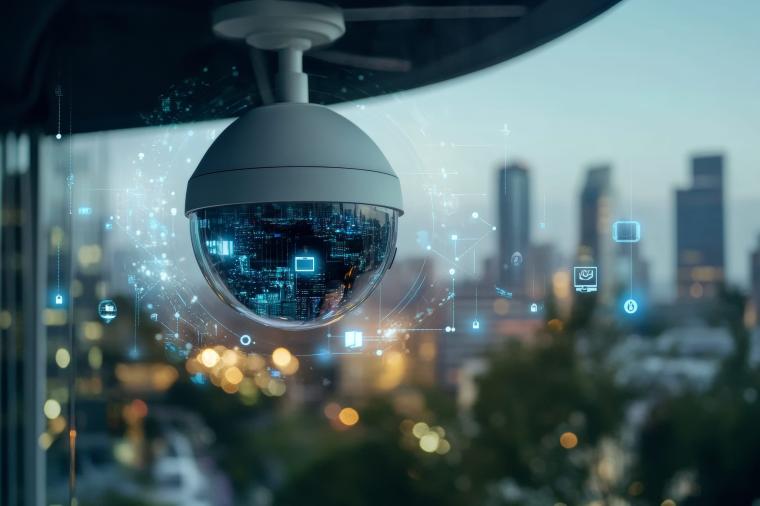
The video surveillance market has been undergoing a profound transformation for several years now, which sees artificial intelligence algorithms no longer limited to recognizing the elements present in the monitored area, but aiming to make video data a key to interpreting events. While opening up new prospects, it also requires us to distinguish between applications that already generate concrete value and those still searching for real usefulness.
The personal role of those in charge of security is changing too, and the EU NIS2 Directive imposes new obligations, bringing cybersecurity within the perimeter of physical security, where cameras, NVRs, networks and platforms are parts of a single infrastructure to be protected.
And as convergence and interoperability become central, the architectural challenge between edge AI, cloud and hybrid solutions emerges. How is the sector's landscape taking shape in the light of all these factors? What direction is it following? Two companies that will be present at Sicurezza 2027, from 17 to 19 November 2027 at Fiera Milano, Dallmeier and Hikvision Italy, offer some answers.
AI Applications: Between Real Value and Technological Promise
Daniele Sisinio, Director of Dallmeier's Italian branch, believes that AI has value only if it translates into a real advantage for security operators, quantifiable in "greater efficiency and fewer false alarms". "Today its value mainly finds application in three areas," he explains, "namely 'object classification', distinguishing human figures, vehicles and environmental details and eliminating false alarms on perimeters. Francesco Panarelli, Sales Director Key Account & Verticals at Hikvision Italy, points out that AI has been present in video surveillance for some time now, something that has been especially evident in "the qualitative improvement in video analytics performance". He says, "Artificial intelligence is also beginning to make itself felt in system-level logistics which, because of their complexity, are truly starting to make a difference for users.”
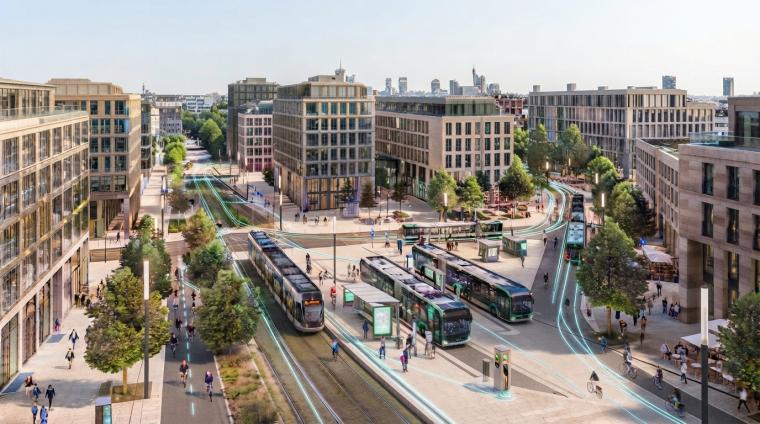
The Practical Limits of Artificial Intelligence
Sisinio comments that many AI technologies still show several practical limitations, generating false positives and uncertain responses. "This is the case," he notes, "of real-time mass facial recognition, held back by strict EU rules such as the GDPR and the AI Act, by the need for perfect lighting conditions, and by large computational requirements." According to Panarelli, "what still seems not to have reached maturity is all predictive analysis based on the harmonization of data coming from different sources. The idea that an AI could anticipate a crime or suspicious behavior in complex, crowded scenarios is still far from being reliable.”
The Implications of the NIS2 Directive
The European NIS2 Directive places cybersecurity at the heart of the physical security of critical infrastructure and essential services. This paradigm affects the design, installation and management of video surveillance systems. Amedeo Basile, Technical Director of Hikvision Italy, recalls that cameras, NVRs and management platforms are network-connected devices which, if vulnerable, become entry points for cyber-attacks. "The entire design of the system therefore changes: it starts from a risk analysis and adopts the 'security by design' principle, that is, network segmentation, encrypted data flows, strong authentication and components with a guaranteed update cycle."
"For us, cybersecurity is not an accessory but a native pillar," states the Director of Dallmeier's Italian branch, "and the impact on projects is total. Anyone who selects, installs or manages video systems must be able to guarantee protection of the entire data chain, from the sensor to the recording. It is no longer enough to lock down the camera: end-to-end encryption, rigorous access management, device hardening and constant firmware updates are required. Legal responsibility extends along the entire supply chain. Installers and system integrators must evolve into certified IT security consultants, while manufacturers must guarantee transparency in hardware and software development, favoring traceable European supply chains. Those who do not comply with these cyber resilience standards are out of the critical infrastructure market."
Which Architectural Model for the Future?
Video data processing more on the camera, in the cloud, or a combination of the two?
According to Daniele Sisinio, the future unquestionably belongs to the hybrid model, "driven by the principle of efficiency and data quality. Edge computing on the camera is essential for real-time AI video analysis and for reducing the bandwidth required, but it demands impeccable image quality at source." For Amedeo Basile too, the future of video surveillance will be hybrid: "on-camera processing is bound to grow because integrated processors make it possible to run AI-based video analytics directly on the device, reducing latency, bandwidth usage and data in transit. But the cloud remains irreplaceable for scalability, centralized management of multiple sites, remote updates and long-term storage. The winning model will therefore be a combination: the edge filters and analyses, the cloud coordinates and stores."
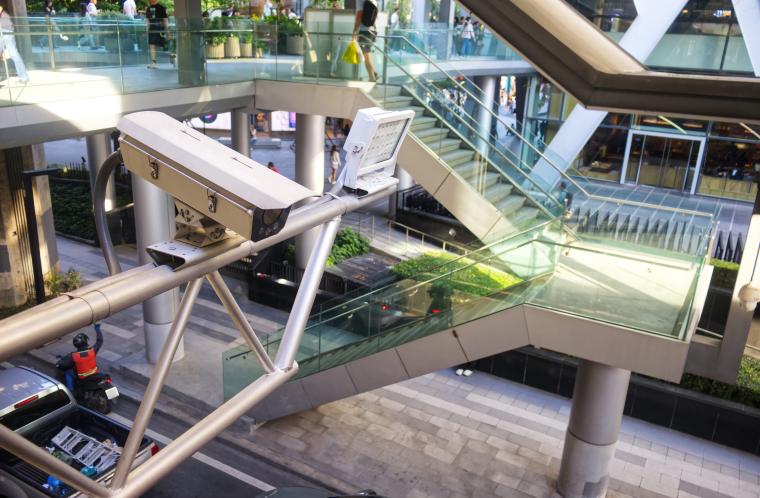
All the Trends Redefining the Video Surveillance Sector at Sicurezza 2027
Integrated and interconnected video ecosystems, on-camera artificial intelligence and the Zero Trust approach are just some of the key themes that will enrich the next edition of Sicurezza, charting the future of video surveillance. The next Sicurezza event at Fiera Milano will offer a broad overview of advanced video surveillance solutions, allowing professionals to see and assess first-hand devices and systems designed for the control and monitoring of a wide variety of environments.
Among current trends, one stands out: the drive towards integrated and interconnected technology ecosystems in which capture, video analysis, recording, storage, and operational workflow management work together to create intelligent infrastructures, capable of making event management more effective and precise. Sicurezza 2027 will focus in particular on artificial intelligence that processes video data locally, that is, directly on the camera: so-called ‘edge AI’, reducing network traffic to the central servers and turning video streams into immediate information.
Great attention will also be given to the ‘Zero Trust’ approach, probably among the most important trends for modern video surveillance systems which, with the shift of cameras to the IP world, the cloud and the Internet of Things, have become potential entry points for cyber-attacks.

Next year’s Sicurezza takes place from 17 to 19 November 2027 at Fiera Milano in Italy as part of the Milan International Building Alliance.