Digital Access Control Improves Hospital Security and Efficiency
In a sector where budgets are always a focus of attention, delivering concrete returns to every investment is crucial. By digitizing access, healthcare premises – whether large hospitals or small clinics – can benefit from day one. They can improve staff and patient safety, quickly implement more efficient, time-saving workflows, and painlessly meet compliance demands.

Healthcare sites always present complex access challenges. They must be welcoming, accessible public spaces. They often occupy large, sprawling areas; unfamiliar faces and first-time visitors are around every single day. At the same time, these premises inevitably have valuable and/or sensitive assets, including confidential data and medicines, which must be secured. Patients, doctors, nurses and support staff must feel safe. In labs and treatment suites, restricted materials and valuable equipment need both security and a compliant system for logging every access event. This has always been healthcare’s ‘business-as-usual’: it is a complex environment for any security manager.
Modern hospitals and clinics, however, now face an extra level of challenges – and opportunities. Their access system may benefit from integration with fire detection, CCTV and other building solutions, for example. With so many temporary and contract workers employed on-site, access is in constant motion. It needs to be tailored to specific and very different needs and, equally, revoked when any time-limited tasks are complete.
Rapid investigation is essential when there is a security breach. Tracing and logging access to specific areas may also be a legal requirement, especially with new NIS2 regulations introduced for critical infrastructure, which demand proactive ‘hybrid’ cyber/physical security frameworks for many healthcare premises. Relying on manual or siloed systems to complete these tasks could eat up hours or even days for security and even medical staff. Happily, there is a better way to work.
Digital Access for the Healthcare Sector
By choosing Assa Abloy’s Aperio wireless locks, integrated natively with an ARD access management solution, Centre Hospitalier Métropole Savoie (CHMS) could issue access rights tailored to individual staff and contractors and implement real-time control, helping to boost site safety. Because Aperio locks are wireless, the hospital introduced more layers of security without incurring excessive installation or operating costs, including for sensitive offices and drug stores. Access point functionality at CHMS now includes real-time management logs and remote door opening. For convenience, staff now carry one credential programmed with their individual tailored permissions. “Having just a single badge, and not having to carry around heavy keys, has been a major advantage for us,” explains Béatrice Dequidt, Health Executive at CHMS.
“We have implemented internal HR management procedures, creating badges that are automatically integrated into ARD's operating software,” adds Alain Gestin, CHMS’s IT Systems Architect. Aperio and ARD maintain compatibility of credentials with the French government’s electronic Health Professional Card (CPS), for added staff and management convenience.
Hospital MAZ in Zaragoza also implemented a new Assa Abloy digital solution, SMARTair, with real-time access functionality. Their online wireless access management system saves security managers’ time because they can implement all changes via the central system in real time, without needing to waste time walking through the hospital.
Staff convenience is further enhanced: they now carry a smartcard programmed with their personalized access permissions. Custom-made cards double as employee IDs, so 625 staff and approximately 100 contractors only need to carry one. Their Assa Abloy system is also mobile access ready, making it easy for the hospital to issue and manage mobile keys in the future without hardware changes. “Digitization presents opportunities for healthcare organizations of every size and type to improve security while they also reduce costs ‘hidden’ in daily workflows,” explains David Moser.
Efficiency: Medicine Control and Other Compliance Challenges
Managing physical keys can impact nursing care, as pharmacy managers at Queen Elizabeth Hospital, Birmingham discovered. An older, mechanical system made it difficult for them to keep track of who held the right key. Searching for that person wasted time. They identified a better solution for convenient secure access to controlled medicines: programmable keys.
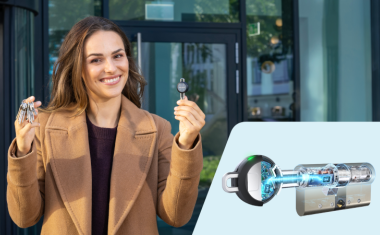
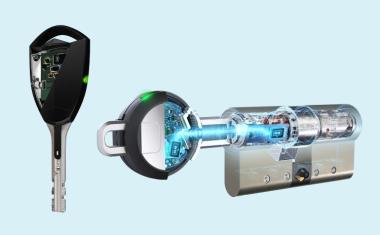
With their Cliq programmable key access solution, power to digital and electromechanical locks is supplied by a standard battery inside every key, so no wires are required – making it an ideal retrofit solution for hospital doors, cabinets and mobile drug trolleys. Audit trails for locks and padlocks are available on demand: nurse managers can quickly see who has accessed cabinets or drug trolleys.
“The message from our nursing staff is that patients are getting medicines much easier and in a more timely fashion,” says Inderjit Singh, Chief Pharmacist at QE Birmingham. “The key return on investment for us is the quality of service we are providing.” David Moser adds, “Our expertise in access, established over decades, enables us to work with customers to get their access ready for what is ahead, and they digitize with confidence.”