
Video Sensing and AI in Perimeter Security: Development and Technical Fundamentals
SERIES – PART 1. By Hans-Peter Büttner and Ronald Güldner | Video sensors, intelligent analysis, and AI are key features of modern perimeter security systems. This three-part series by Hans-Peter Büttner and Ronald Güldner explains the technical fundamentals, analysis methods, and practical test results. This first part covers the technical fundamentals and the development of video sensor technology.
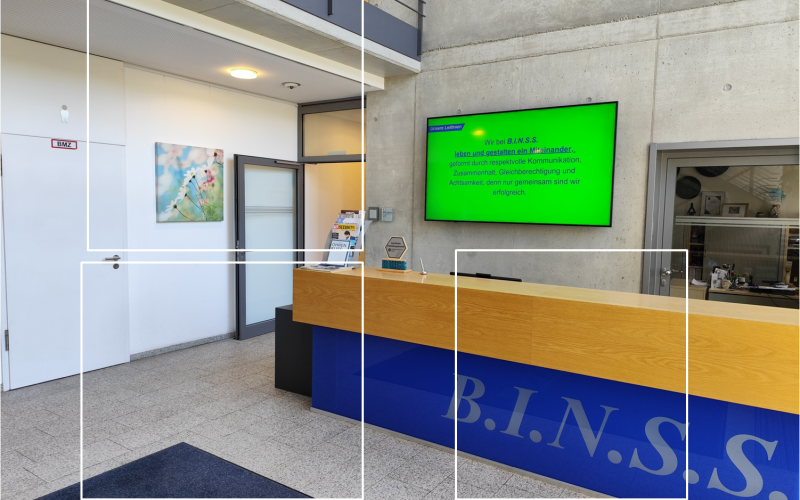
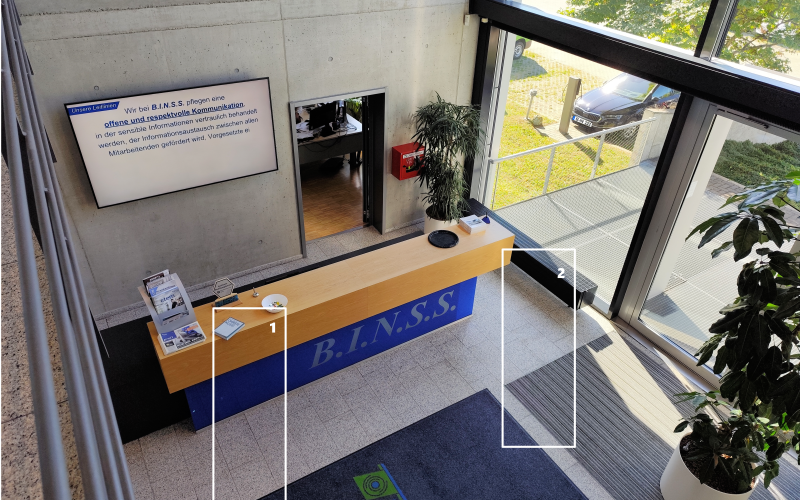
Monitoring large areas requires methods that reliably detect relevant events while reducing the workload on security personnel. Video sensors form a central foundation for this: They automate processes, reduce monotonous monitoring tasks, and enable a precise focus on security-related events. Sensors of varying quality were already in use in analog systems and were later further developed in IP-based systems. The technical foundation has undergone a fundamental change: While analog systems merely detected changes in grayscale values between two images, modern digital methods allow for the analysis of image content and thus a significantly more nuanced assessment.
With the transition to digital video technology, it became possible not only to detect the presence of people and objects but also to identify specific characteristics such as movement patterns, colors, object classes, or time-dependent events. This development has significantly expanded the range of applications for video sensors and forms the foundation for modern perimeter protection systems, which rely on automated analysis and rapid response.
Activity Detection as the Origin of Sensor Technology
Activity detection (AD) is considered the foundation of video surveillance. It compares changes in grayscale values between two consecutive frames. If deviations are detected, the system triggers an event alert. This method is fast—changes can be detected within 40 to 80 ms—and is particularly well-suited for indoor areas or protected outdoor areas. Speed is a key advantage, as it enables an immediate response to changes in the image.
To avoid false alarms, detection zones are either applied to the entire image area or inserted into specific parts of the image. Movement within these zones triggers events, while other areas are ignored. Directional detection is also possible by temporarily deactivating certain areas. However, AD quickly reaches its limits under complex outdoor conditions, as changes in lighting, shadows, or weather conditions can lead to numerous false alarms.
Video Sensors: Advanced Features and Flexible Configuration
Modern video sensors offer significantly more features than the AD. They account for variations in lighting, weather conditions, and complex scenarios. Over 100 freely definable detection zones can be adjusted for size, position, sensitivity, and measurement time. This makes it possible to ignore small animals, prioritize vehicles, or detect slow movements such as crawling. The parameter settings enable very precise control of detection and allow the sensor system to be tailored exactly to the conditions of the specific property.
A key principle is the detection threshold: an event is triggered only when changes in the image within a field exceed this threshold. This allows people in a parking lot to be ignored while vehicles are reliably detected. The sensitivity of the detection zones can also be adjusted to lighting conditions, ensuring that even people dressed in dark clothing are reliably detected in dimly lit areas.
Special Functions and Scenarios
Sensor zones can be linked together, for example as pre-alarm and main alarm zones. An alarm is only triggered when an object passes through both zones in the correct order. Blocking zones, which temporarily mute downstream zones, also enable complex scenarios. These functions make it possible to replicate typical movement patterns within a property and avoid false alarms caused by routine activities.
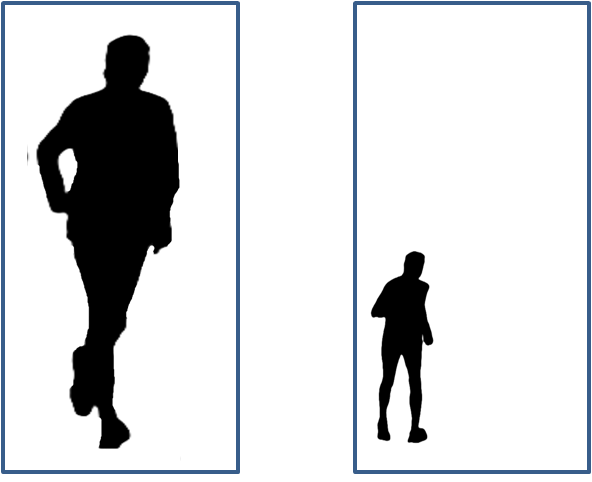
Weather conditions such as rain or snow cause global changes that modern sensors ignore. Partial changes – such as those caused by a person – are nevertheless detected. Perspective adjustments ensure that objects are assessed equally, regardless of their distance from the camera. This is particularly important, as people in the foreground appear significantly larger than those in the background.
Configuring specific scenarios, such as day and night settings, and adjusting for summer or winter conditions, allows for further detailed adaptation to the conditions of the scene being monitored.
Limitations of Sensor Technology
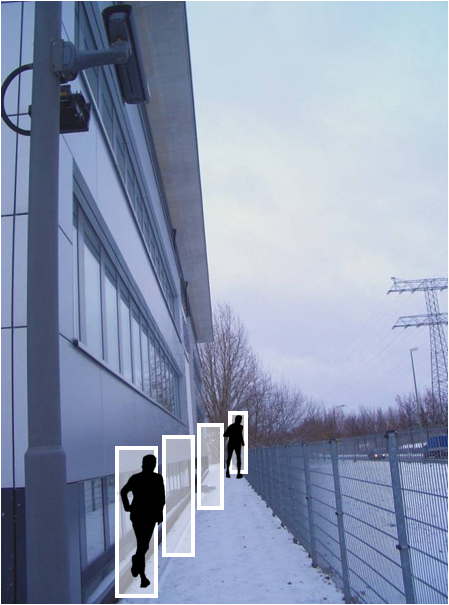
Despite their flexibility, configuring them remains challenging. Seasons, lighting conditions, and shadows require regular adjustments. Shadows caused by wind or passing vehicles are particularly problematic. Thermal imaging cameras can reduce these effects by operating independently of light reflections. The combination of video sensors and thermal imaging technology has proven effective in many systems, as it significantly reduces the false alarm rate.
One advantage, however, remains unique: the extremely short detection time of no more than 80 ms cannot be matched by any AI-based analysis. This speed continues to make traditional video sensors an important component of modern perimeter security systems.
Relevance to Perimeter Security
In perimeter protection, systems must reliably distinguish between relevant and irrelevant events. Video sensor technology provides a fast and flexible foundation for this. Especially in areas with rapidly changing lighting conditions or complex movement patterns, the ability to customize sensor fields is a decisive advantage. The sensors can be configured to ignore routine movements—such as those of employees—while reliably detecting security-related incidents.
The combination of speed, flexibility, and the ability to model complex scenarios makes video sensors an indispensable component of modern security architectures. Even as AI-based methods gain increasing importance, traditional sensor technology remains a vital foundation due to its real-time capabilities.
Conclusion
Video sensors have evolved from simple grayscale detectors into highly flexible analysis tools. Their ability to accurately map scenarios and respond quickly to changes continues to make them an essential component of perimeter security. The importance of AI-based analysis methods will continue to grow. For specific applications, traditional sensor technology remains relevant due to its detection speed. Combining both approaches provides a solution that enables both rapid and complex analyses.
Part 2 will be available here on GIT SECURITY International starting October 30, 2026.
Contact the Authors
Business Partner
B.I.N.S.S. Datennetze und Gefahrenmeldesysteme Berlin GmbHSaaler Bogen 2
13088 Berlin
Germany





most read

Fiber Optic Sensing for Critical Infrastructure: Real-Time Threat Detection Across Vast Networks
Fiber optic sensing enables real-time monitoring and early threat detection across critical infrastructure

Certification you can specify with confidence, wherever you're building
Specifying fire detection across Europe is rarely as simple as choosing a product that works.

Secsolutionforum 2026 to explore integrated security, resilience and regulatory developments in Italy
Secsolutionforum 2026, the event dedicated to physical and digital security, will take place on 7 and 8 October at BolognaFiere, as part of Urban Tech 2026 – The Urban Technology Show.

Programmable keys and digital locking cylinders can simplify access and compliance
The key to meeting building managers’ growing security and compliance challenges – without increasing workload or costs – is the implementation of smarter access

How Dom Eniq Transformed Access Control at Amsterdam’s Muziekgebouw Concert Hall
Muziekgebouw Amsterdam upgraded to the DOM Eniq electronic locking system, giving staff full control over access rights