AI Video Analysis in Perimeter Security: Intelligent Video Analysis and AI-Based Methods – PART 2
SERIES – PART 2. By Hans-Peter Büttner and Ronald Güldner | Video sensors, intelligent analysis, and AI are key features of modern perimeter security systems. This three-part series explains the fundamentals, analysis methods, and test results. Part 2 examines intelligent video analysis and the expanded capabilities of AI-based methods.
The transition from analog to digital video technology marked the beginning of a fundamental shift in the analysis of security-related image data. While traditional video sensors primarily analyze changes in grayscale values between two frames, digital systems enable a semantic interpretation of the scene. People, vehicles, and other objects can be distinguished, movement patterns can be evaluated, and complex events can be automatically detected. This development has significantly increased the performance of modern video surveillance systems and forms the basis for AI-supported methods that are used today in many security-critical areas.
Although digital systems require more time for image compression and pattern recognition, they offer significantly greater robustness against changes in lighting conditions. Light reflections, shadows, or rain no longer automatically trigger event alerts, as the analysis is based on object characteristics rather than changes in grayscale values. This makes outdoor surveillance more reliable and less prone to false alarms.
content:
- Intelligent Video Analysis: Object-Oriented Analysis
- AI-Based Video Analysis: Advanced Features and Self-Learning
- Analysis Functions in Detail
- Perimeter Security Requirements
- Anti-Tracking Mode: Can You Make Yourself Invisible?
- System Integration and Computing Capacity
- Conclusion
- Contact the Authors
Intelligent Video Analysis: Object-Oriented Analysis
Intelligent Video Analysis (IVA) identifies defined surveillance areas and analyzes only the objects detected within those areas. People, vehicles, or objects are classified, and only relevant movements are reported. This object-oriented analysis represents a significant advancement over traditional sensor technology, as it substantially reduces the number of false alarms.
Configuring IVA is relatively simple. Typically, you only need to define the areas to be monitored and activate the desired functions. Complex field structures or custom thresholds are largely unnecessary. Nevertheless, setup requires experience, as the analysis areas must be chosen appropriately and typical movement patterns must be taken into account.
One drawback remains latency: detection takes several hundred milliseconds. In confined spaces, this can lead to delayed alerts. For this reason, IVA and traditional sensor technology are often combined—an alarm is triggered only if both systems report an event within a defined time frame. This combination merges the speed of sensor technology with the robustness of IVA.
AI-Based Video Analysis: Advanced Features and Self-Learning
AI-based methods significantly outperform IVA. They detect people, vehicles, and object classes; directions of movement, speeds, and dwell times; abnormal behavior patterns; objects that have been placed or removed; license plates; and tampering with cameras. The systems can not only analyze events as they occur but also search through stored images. Time-space schemes enable the reconstruction of events across multiple cameras.
A key advantage of AI analysis is its ability to learn autonomously. By continuously adapting to the environment, false alarms can be further reduced and detection performance improved. This is particularly important in dynamic environments where lighting, vegetation, or usage frequently change. AI recognizes patterns that remain invisible to traditional systems and can reliably identify unusual events.
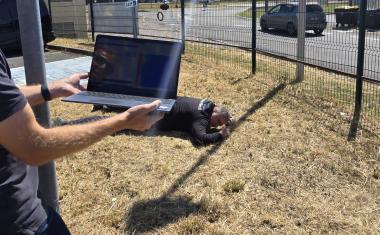
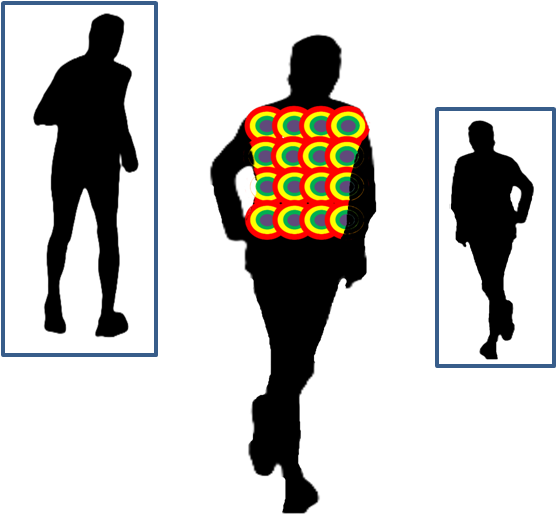
There is currently a debate that people wearing specially designed clothing may not be recognized as such by an AI-powered camera. Such T-shirts are available for purchase. This may be a temporary situation. Here, too, the video sensor still has advantages. No matter how cleverly a person is dressed, they create changes in grayscale, which immediately trigger an event alert.
Analysis Functions in Detail
Modern AI systems offer a wide range of specialized functions. These include the detection of crowds, the assessment of movement directions and speeds, and the analysis of dwell times. These functions are particularly relevant for areas where unauthorized individuals might be present or where unusual movement patterns indicate security-related incidents.
The detection of abandoned objects is another example of the capabilities of AI analysis. Traditional systems would often ignore such objects or detect them only by chance. AI systems, on the other hand, can continuously monitor the scene and reliably report changes. This is particularly important in areas with high foot traffic or in security-critical zones.
License plate recognition also plays an important role. It enables the automatic tracking of vehicles at entry and exit points and can be linked to access control systems. This allows for the precise documentation of vehicle movements and the rapid identification of security-related incidents.
When playing back event images triggered by sensor alarms, the respective sensor fields that triggered the alarm are displayed. With AI-based methods, specific areas or zones are monitored. In the event of an incident, the occurrence is reported by displaying the alarm image; however, it is not always immediately apparent where in the image the event is located. Therefore, the object triggering the event is outlined in color, and its direction of movement is displayed.
Perimeter Security Requirements
Perimeter security involves different priorities than, for example, those in stadiums or public areas. AI systems must detect attempts to scale fences and walls, identify crowds and loitering, monitor movement on adjacent rooftops, oversee entry and exit points, automatically track intruders, and recognize license plates at access points. Analysis must be reliable and rapid in order to initiate interventions.
The ability to recognize unusual movement patterns is particularly important. A potential attacker often moves differently than ordinary people. They approach the perimeter cautiously, stop, observe their surroundings, or try to remain inconspicuous. AI systems can recognize such patterns and report them early on.
Anti-Tracking Mode: Can You Make Yourself Invisible?
Lately, a new topic has been causing quite a bit of confusion: so-called “anti-tracking mode.” Within certain limits, this can work—but not in the long run. First of all, not every AI can be fooled—only the one against which the “opposing” pattern was developed. Furthermore, the AI still wins if lighting conditions are poor or if the camouflage clothing shifts out of place. And even with all the artificial intelligence, natural intelligence still remains: the person behind the monitor can still recognize a human as a human.
System Integration and Computing Capacity
AI analysis is computationally intensive. If it is not performed directly in the camera, additional processing computers are required. The cost per channel varies greatly depending on the manufacturer and feature set. Proprietary systems make it difficult to replace individual cameras. Nevertheless, the integration of AI analysis into cameras will continue to advance as modern chipsets become increasingly powerful.
Integrating AI analysis into existing systems requires careful planning. The analysis must be integrated into the video management system, and communication between the components must function reliably. Parallel operation of different systems is possible, but often not optimal, as configuration becomes complex and analysis results may be inconsistent.
Conclusion
Other episodes in the series
Intelligent video analysis and AI-based evaluation have significantly enhanced the performance of modern video surveillance systems. They enable robust and reliable analysis of security-related events and significantly reduce the number of false alarms.
Despite higher latency, they remain an indispensable component of modern security architectures.
The future lies in combining traditional sensor technology with AI analysis to enable both fast and robust evaluations.